What Are the Key Principles of Effective Contract Management?
Contracts shape how organizations buy, sell, deliver services, and manage risk. But signing a contract is only the beginning. Real value comes from how well the contract is managed after it is executed — including compliance, renewals, performance monitoring, and ongoing updates.
That's why effective contract management matters in every industry. It helps companies reduce legal risk, avoid missed deadlines, control costs, and improve relationships with customers and suppliers.
In this guide, we'll cover the key principles of effective contract management, plus practical frameworks and tools — including how modern contract management solutions and AI can help teams streamline contract processes.
Understanding Effective Contract Management
Effective contract management means controlling the full contract journey — from drafting and negotiation to compliance and renewal — so the agreement delivers expected value and avoids unwanted surprises.
Strong contract management also supports strategic outcomes:
- Better vendor pricing and service quality
- Reduced risk of disputes and penalties
- Faster approvals and smoother operations
- Higher compliance and governance confidence
At a basic level, effective contract management depends on clear responsibilities, timely monitoring, strong documentation, reliable workflows, and consistent compliance oversight. These are the core contract management best practices that scale across teams.
It works best when paired with contract lifecycle management practices that connect drafting, execution, monitoring, and renewal in a single process.
The Contract Lifecycle: Stages and Best Practices
A major principle of contract success is knowing that contracts are not "one-time" documents. They are ongoing assets that require attention over time.
That's what contract lifecycle management focuses on: managing contracts across structured stages so teams stay proactive instead of reactive.
Contract lifecycle management best practices
- Maintain a single source of truth for every contract
- Standardize templates and clause libraries
- Track obligations, renewal windows, and notice periods
- Use workflows for approvals and change control
- Conduct periodic reviews and audits
Key stages of contract lifecycle management
- Drafting: Clear terms, accurate scope, and defined obligations.
- Negotiation: Align expectations, reduce ambiguity, and document redlines properly.
- Execution: Finalize, approve, and sign — with the correct version stored centrally.
- Post-signature management: Monitor performance, deliverables, and deadlines.
- Renewal or termination: Make decisions early, renegotiate terms, or close obligations properly.
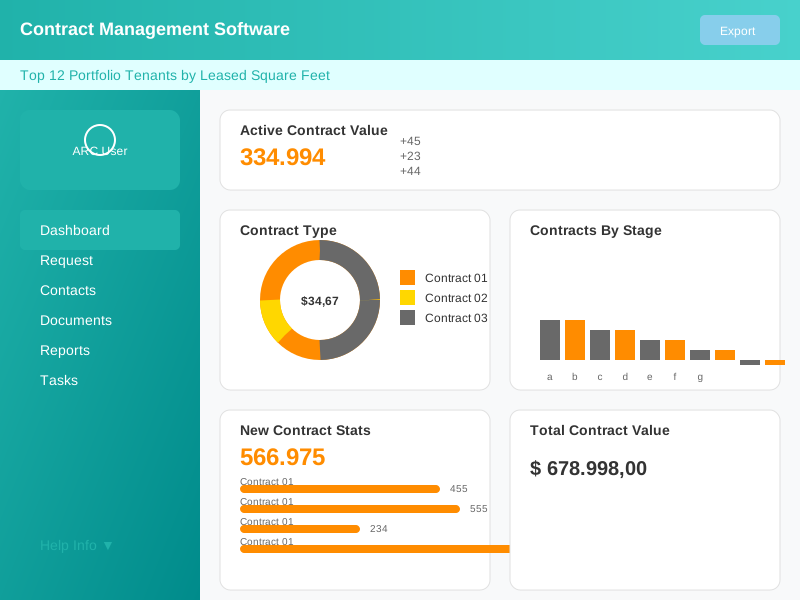
The contract lifecycle is where many businesses lose value — especially post-signature. This is why monitoring and compliance matter as much as negotiation.
4 Ways to Ensure Effective Contract Management
Many teams ask what practical actions create immediate improvement. Here are 4 ways to ensure effective contract management in a clear and repeatable way:
- Centralize contract storage and data so terms and dates are searchable.
- Define roles and accountability for renewals, compliance, and vendor management.
- Standardize workflows and approvals for creation, review, signing, amendments, and renewals.
- Use automation and reporting to reduce missed deadlines and improve visibility.
These steps reduce missed deadlines and help teams consistently streamline contract processes.
Example: what this looks like in practice
A mid-size procurement team managing 200+ active vendor contracts assigns a named renewal owner to each agreement, sets automated alerts 90 and 30 days before expiration, and requires every new contract to start from an approved template. Within two renewal cycles, missed-renewal incidents typically drop toward zero and average approval time falls because reviewers are working from familiar, standardized language instead of one-off drafts.
Core Principles of Effective Contract Management
Effective contract management is not just one activity — it's a discipline. These are the principles that consistently show up in high-performing organizations.
1) Clear roles and responsibilities
Every contract should have a business owner, a contract administrator or legal ops owner, a compliance owner (if required), and a renewal owner. Lack of ownership is one of the most common causes of missed renewals and compliance gaps.
2) Standardization and consistency
Organizations improve outcomes when they standardize templates, clause language, approval routing, naming conventions, and key contract fields. This makes contracts easier to monitor and reduces negotiation time.
3) Visibility into obligations and dates
Contracts contain more than end dates. Strong contract management includes tracking service obligations, reporting requirements, insurance requirements, escalation terms, renewal windows, and notice periods.
4) Risk and compliance focus
Without contract compliance management, organizations may violate internal controls or industry regulations — even with good contracts. Compliance requires audit trails, approval documentation, obligation tracking, and periodic reviews.
5) Continuous improvement
Effective teams review contract performance metrics regularly and update processes as needs change.
Contract Management Best Practices Checklist
Here's a plain-language checklist of contract management best practices that scale well.
| Best Practice | Why It Matters |
|---|---|
| Use a centralized repository | Eliminates "lost contracts" |
| Track key dates automatically | Prevents missed renewals |
| Standardize templates | Speeds up drafting |
| Maintain audit trails | Supports compliance |
| Assign owners | Ensures accountability |
| Review contracts quarterly | Catches risks early |
| Use dashboards | Improves visibility and reporting |
Contract Management Best Practices for 2026: What's New
The core principles above still hold, but three things have shifted how leading teams apply them in 2026.
| 2026 Shift | What It Looks Like in Practice |
|---|---|
| AI-assisted review by default | AI extraction flags key terms and risk clauses during intake, instead of legal manually scanning every contract |
| Real-time obligation dashboards | Renewal and compliance status is visible continuously, replacing quarterly manual audits |
| Integration-first buying criteria | Teams now expect contract data to sync with CRM, ERP, and finance systems out of the box, not as a custom add-on |
In short, 2026 best practice is less about having a checklist and more about having a system that keeps the checklist enforced automatically. See how this plays out in a full contract management process walkthrough.
Leveraging Technology: Contract Management Solutions and AI
As contract volumes grow, manual tracking becomes too risky. That's why many organizations adopt contract management solutions to improve control, speed, and compliance.
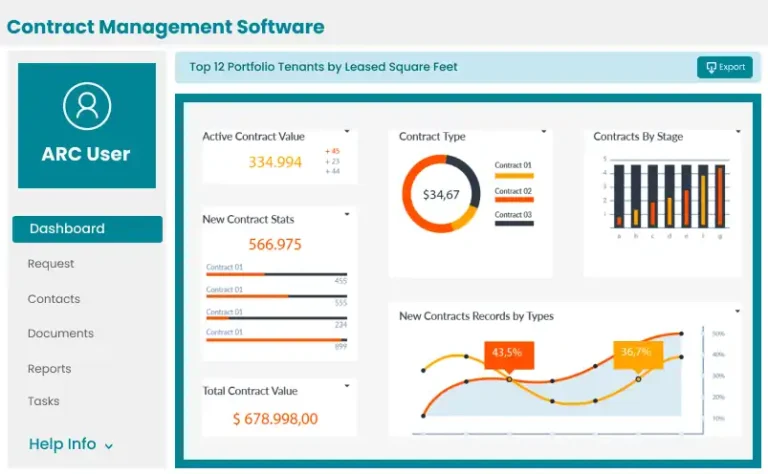
A modern platform can store all agreements securely, automate reminders for key dates, enforce approval workflows, provide reporting dashboards, and track changes and versions. It also connects to obligation management workflows to reduce risk across teams.
What AI adds
AI improves contract management by extracting and structuring contract data. This helps teams reduce manual entry and identify critical terms faster, especially when paired with AI contract extraction. This is why many businesses seek the most effective AI contract management systems.
Most Effective Contract Management Software for Larger Teams in 2025
Larger teams need software that supports multiple departments without breaking workflows. That's why the most effective contract management software for larger teams 2025 typically includes role-based permissions, workflow automation, integrations (ERP, CRM, email, e-signature), dashboards and analytics, contract data extraction (AI), and audit trails.
This is what defines the most effective contract management software for larger teams: it increases speed and control at the same time. For a broader comparison of vendors, see our roundup of the best CLM software guide.
Key capabilities larger teams should prioritize
| Feature | Benefit |
|---|---|
| Collaboration tools | Legal + procurement alignment |
| Workflow automation | Faster approvals |
| AI extraction | Less manual work |
| Reporting dashboards | Better decisions |
| Integration support | No duplicate entry |
Strategies for Effective Procurement Contract Management
Procurement contracts have unique pressure points: vendor performance, pricing escalation clauses, supply chain risk, and renewals. The best strategies for effective procurement contract management include vendor scoring and performance reviews, obligation tracking and SLA monitoring, early renewal planning, contract consolidation opportunities, and risk modeling for key suppliers.
Contract Compliance Management: Ensuring Adherence and Reducing Risk
Contract compliance management ensures that obligations are being met by both internal stakeholders and external vendors or customers. Strong compliance programs include documented approval flows, regular audits, tracking policy requirements (insurance, certifications, reporting), obligation reminders, and consistent renewal or termination workflows.
Effective Contract Management in Healthcare
Healthcare contracts are highly regulated and often tied to patient outcomes and reimbursement models. This makes effective contract management in healthcare essential for both compliance and financial performance.
Healthcare contract management should prioritize regulatory and HIPAA-related tracking, vendor credential verification, payer/provider agreement monitoring, contract renewal tracking and notice periods, and audit readiness. Because healthcare organizations manage many agreements across departments, centralized tracking is critical.
Contract Management Tips to Streamline Contract Processes
If you want faster improvements without rebuilding everything, these contract management tips help immediately:
- Use standardized templates for high-volume contract types
- Create clause libraries (approved legal language)
- Automate reminders for expirations and notice periods
- Track KPIs: cycle time, renewal success rate, compliance rate
- Prioritize high-risk and high-value agreements first
These actions directly help teams streamline contract processes while improving control.
How Camarc.ai Supports Effective Contract Management (Neutral Positioning)
Camarc.ai helps organizations manage contracts with structured workflows and AI-powered data extraction. Instead of contracts staying stuck in PDFs, Camarc.ai helps teams convert agreements into searchable records with timelines and compliance fields.
With Camarc.ai, teams can:
- centralize contract data and documents
- track key dates and obligations
- automate workflows across stakeholders
- reduce compliance gaps with audit-ready history
This supports stronger contract lifecycle management and helps teams avoid reactive contract work.
Conclusion: Building a Culture of Contract Management Excellence
The key principles of effective contract management are simple, but powerful: clarity, accountability, structure, visibility, compliance, and continuous improvement.
Organizations that follow these principles get better outcomes — fewer disputes, fewer missed deadlines, better vendor relationships, and improved operational performance. With the right process and technology, contract management becomes more than administration — it becomes a strategic advantage.
Want to strengthen contract management without adding more manual work?
Modern teams use AI and automation to reduce risk, improve compliance, and increase renewal control. Camarc.ai helps you centralize and search contract data, track key dates and obligations, and automate workflows and compliance reporting.
FAQs
1) What is effective contract management?
Effective contract management is the structured process of managing contracts across drafting, negotiation, execution, compliance, and renewal to reduce risk and maximize value.
2) What are contract management best practices?
Best practices include central storage, workflow automation, compliance monitoring, audit trails, and clear ownership for each contract.
3) How do contract management solutions help streamline contract processes?
They automate reminders, standardize workflows, improve visibility, and reduce manual errors across the contract lifecycle.
4) What should larger teams look for in contract management software in 2025?
The most effective contract management software for larger teams 2025 should include workflows, reporting dashboards, integrations, AI extraction, and compliance audit history.