Contract Obligation Management 101
A contract does not create value at signature alone. Value appears when every duty is tracked, owned, and completed on time.
That is why contract obligation management matters. It helps teams monitor deliverables, milestones, deadlines, service levels, and renewal actions before issues turn into penalties.
This blog explains how to organize contract obligations, how contract obligation tracking works in practice, and how CLM platforms such as CAMARC support post contract management at scale.
Reference: CAMARC centralizes contract requests, approvals, execution, and tracking in one place. CAMARC
Reference: CAMARC SRS context includes lifecycle stages, notifications, document uploads, dashboards, search, and RBAC.
Understanding Contract Obligations
Definition
Contract obligations are the promises each party must fulfill under an agreement. They can include actions, dates, conditions, approvals, reports, payment events, and performance targets.
In simple terms, obligations and contracts are connected through measurable commitments. If one party must deliver something, report something, or notify something, that is an obligation to track.
Common obligation types
Most organizations manage more than one obligation type at the same time. Financial duties, operational tasks, legal requirements, and service commitments often sit inside the same agreement.
This is why contract obligation management should classify obligations clearly. A structured list makes ownership and follow up much easier.
- Financial obligations: payment dates, credits, rebates, pricing adjustments, and penalties.
- Operational obligations: onboarding, reporting, document submission, and task completion.
- Compliance obligations: certifications, audit support, privacy duties, and regulatory notices.
- Contract performance obligations: quality standards, acceptance criteria, uptime, and response times.
Reference: World Commerce & Contracting report
Why obligations are missed
Many obligations are missed because they stay buried in long documents. Teams sign the agreement, store the PDF, and move on before assigning owners or dates.
Manual methods also create risk. Spreadsheets, inbox reminders, and shared calendars rarely reflect amendments, evidence, or clause-level ownership.
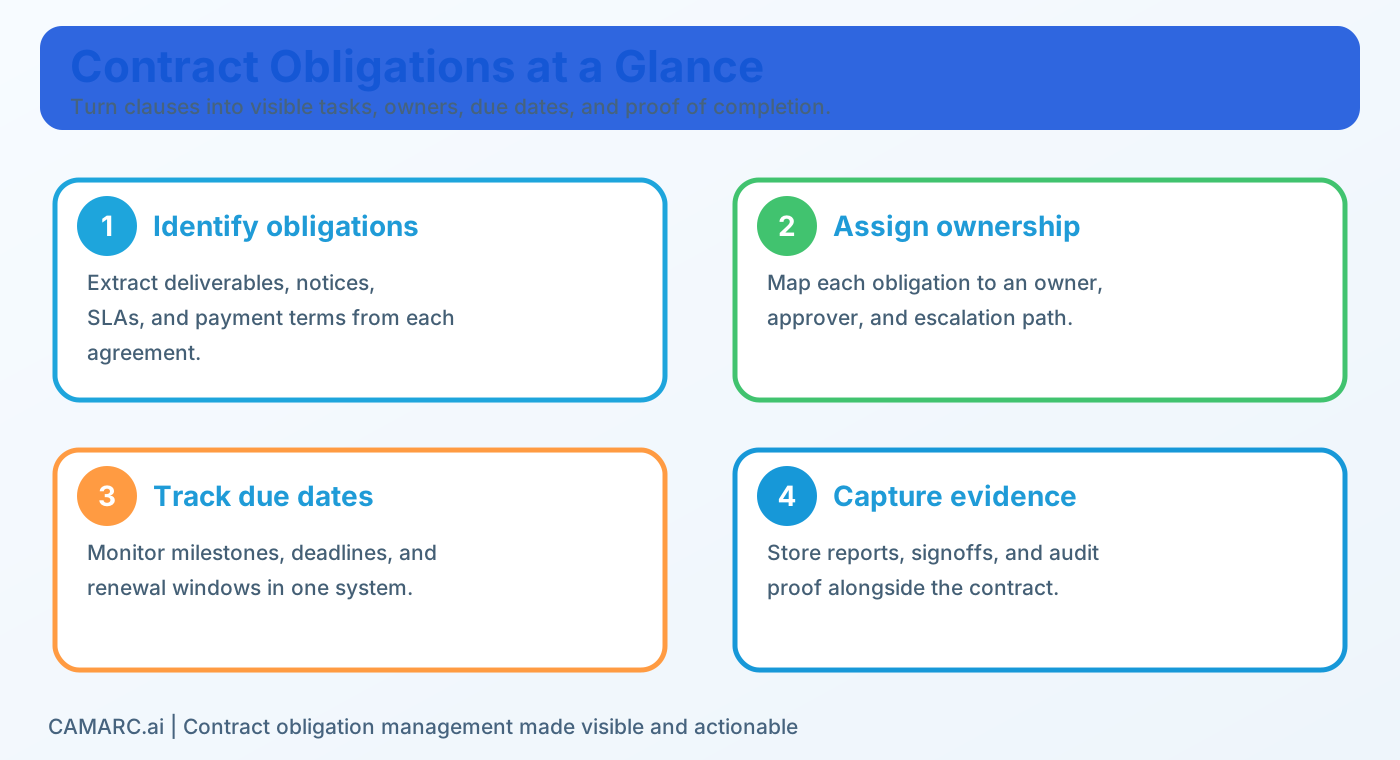
Need every obligation visible in one place? CAMARC helps teams centralize contract obligations, owners, due dates, and supporting documents.
Request a DemoTurning Obligations Into a Tracking System
Start with one source of truth
A practical system begins with a centralized repository. Contracts, amendments, attachments, and approval history should live in one controlled environment.
This foundation supports post contract management because everyone works from the same record. It also reduces confusion about versions and clause updates.
Reference: CAMARC provides centralized requests, approvals, execution, collaboration, and tracking.
Extract and label the obligations
After execution, convert key clauses into trackable items. Focus on high-value or high-risk duties first, including notice periods, milestone dates, payment terms, SLA targets, and renewals.
Each item should carry metadata such as contract type, business unit, vendor, due date, risk level, and clause reference. This makes contract compliance tracking much easier to filter and review.
Assign owners and evidence rules
Every obligation should have a named owner. Some should also have an approver, backup owner, and escalation path.
Evidence matters just as much as reminders. If a team met a milestone, there should be a signoff, report, or timestamped proof linked to the obligation.
- Owner examples: finance for payment timing, operations for delivery acceptance, legal for notices, and IT for SLA measurement.
- Evidence examples: acceptance forms, reports, emails, certificates, screenshots, or signed approvals.
Still using spreadsheets for contract deliverables tracking? CAMARC turns obligations into structured records with status, ownership, alerts, and proof of completion.
Review obligations on a schedule
Tracking works best when open items are reviewed regularly. Weekly reviews are useful for active deals and service agreements. Monthly reviews work well for broader portfolios.
These check-ins strengthen contract compliance management. They also help teams escalate overdue items before they become breaches.
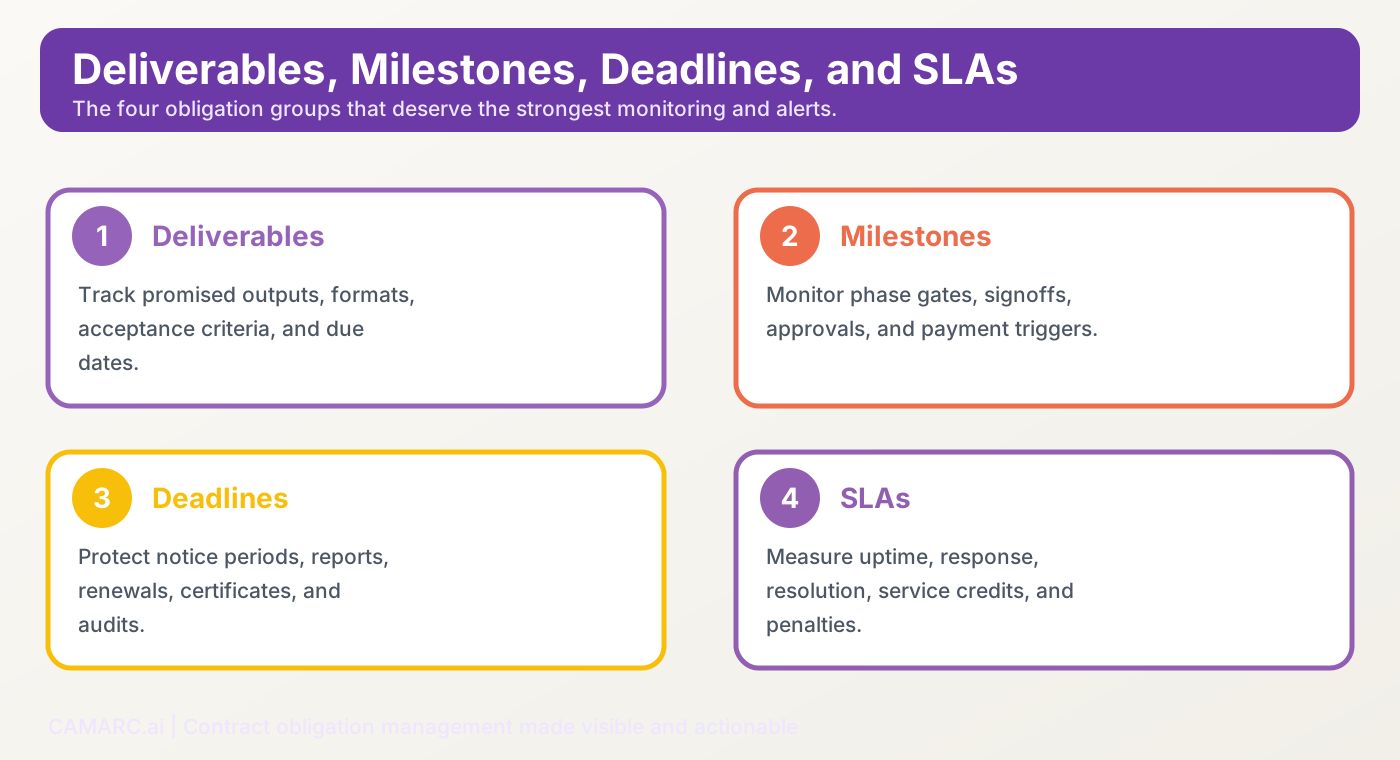
Managing Deliverables, Milestones, Deadlines, and SLAs
Deliverables
Contract deliverables tracking checks whether promised outputs are submitted correctly and on time. It should capture format, quality standard, acceptance criteria, and due date.
If acceptance is required, the system should record who approved the deliverable and when. That evidence protects both performance and payment accuracy.
Milestones
Contract milestone tracking focuses on phase gates, signoffs, approvals, and payment triggers. Milestones often connect legal terms to operational work.
When milestone data is visible, teams can see dependencies early. This prevents delays from spreading across implementation or vendor delivery timelines.
Deadlines
Contract deadline tracking protects the dates that are easiest to miss and hardest to recover. These can include renewal windows, audit submissions, reporting deadlines, and termination notices.
A missed deadline can remove commercial rights or create penalties. That is why high-risk dates should trigger early alerts and defined escalation steps.
Service-Level Agreements
A service-level agreement defines measurable performance expectations. Typical SLA terms include uptime, response time, resolution time, availability, and service credits.
To manage SLAs well, teams need clear KPIs, one agreed data source, and a review cadence. Good contract monitoring software turns this into live dashboards and alerts rather than monthly surprises.
Track SLA fields such as target metric, actual result, reporting period, breach threshold, remedy, and owner.
Want stronger visibility into milestones, notices, and service levels? CAMARC dashboards and alerts help teams monitor obligations before they become penalties.
Explore CAMARCUse risk-based priority
Not every obligation needs the same level of attention. High-risk items should receive earlier reminders, stronger approval controls, and faster escalation.
This approach improves automated obligation tracking without overwhelming users. It keeps attention on the duties that can create the greatest financial or compliance impact.
References: NIST SLA definition, CIO SLA guide
Why Automation Matters After Contract Signature
Manual trackers can list dates, but they rarely connect each obligation to clause text, amendment history, audit evidence, and role-based permissions.
They also depend too heavily on individual discipline. If the owner changes roles or the agreement is amended, important obligations can quickly fall through the cracks.
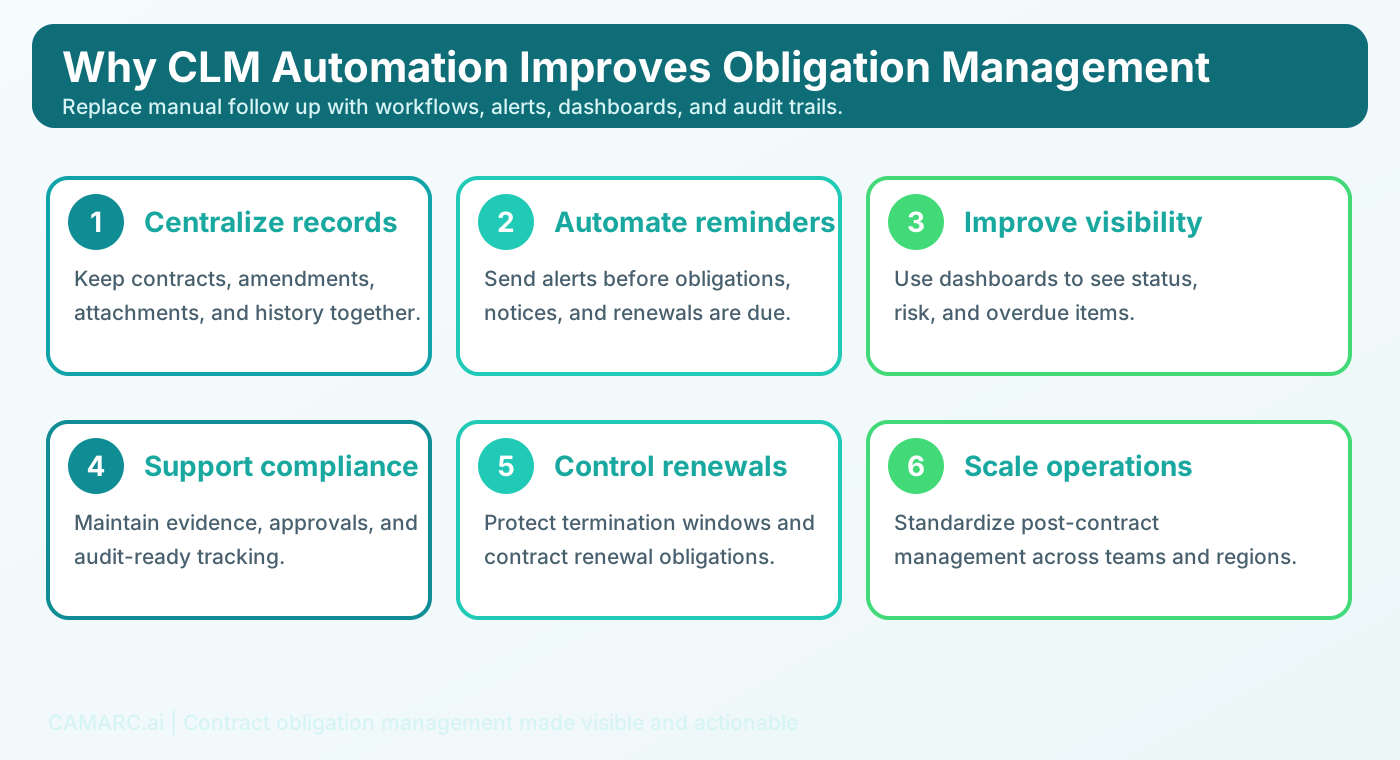
Obligation management software gives teams one source of truth. It automates reminders, routes tasks, stores evidence, and maintains a visible audit trail.
That makes contract compliance tracking more reliable. It also improves contract renewal obligations, legal obligation management, and portfolio-wide reporting.
Key gains: fewer missed dates, faster escalation, better accountability, cleaner audits, and better renewal control.
How CAMARC supports contract lifecycle management obligations
CAMARC is built to centralize contract requests, reviews, approvals, execution, and tracking. The platform also supports obligation visibility, dashboards, collaboration, audit trails, and role-based control.
The CAMARC SRS adds more relevant context. It describes workflow stages, email notifications, Power BI dashboards, search and filtering, document storage, vendor management, and governed access.
Together, these capabilities support contract obligation tracking across the full lifecycle.
Reference: CAMARC SRS describes notifications, dashboards, lifecycle stages, uploads, search, and RBAC for operational governance.
Ready to move beyond manual follow up? Book a CAMARC demo to automate obligation tracking, escalation, audit history, and renewal control.
Book a DemoBusiness Value for Decision Makers
Why leaders should care
Contract obligation management is not only a legal control. It is also a business performance discipline that protects value after signature.
When obligations are visible, leaders can avoid missed renewals, recover service credits, improve vendor accountability, and reduce time lost searching for the latest document version.
Value by team
Procurement gains stronger supplier oversight. Finance gains better timing for payments, rebates, and revenue linked events.
Legal and compliance gain better audit readiness. Operations gain confidence that contract deliverables, milestones, and dependencies are being monitored in a controlled process.
Procurement gains stronger supplier oversight. Finance gains better timing for payments, rebates, and revenue-linked events. Legal and compliance gain better audit readiness. Operations gain confidence that deliverables, milestones, and dependencies are being monitored in a controlled process.
- Procurement: better vendor performance enforcement.
- Finance: fewer missed credits, better forecast accuracy, and cleaner payment controls.
- Legal and compliance: stronger evidence trails and fewer avoidable breaches.
- Operations: better delivery coordination and clearer accountability.
References: WorldCC report, CAMARC CLM guide
Frequently Asked Questions
What is contract obligation management?
Contract obligation management is the process of identifying, assigning, tracking, and proving that each contractual duty is fulfilled. It covers tasks such as deliverables, deadlines, notices, service levels, and contract renewal obligations.
How does contract obligation tracking reduce risk?
It reduces risk by turning clause language into visible tasks with owners, dates, reminders, and evidence. This helps teams act before an issue becomes a breach or penalty.
What should obligation management software track?
It should track obligation type, clause reference, owner, due date, status, priority, related documents, and proof of completion. Strong tools also support dashboards, alerts, and audit trails.
Why is post contract management important?
Because most duties happen after signature. Post contract management ensures the business continues to monitor performance, compliance, deadlines, and counterpart obligations throughout the agreement term.
How do CLM tools support contract compliance management?
CLM tools centralize contracts, automate reminders, preserve version history, and provide visibility into status and risk. That makes contract compliance management easier for legal, procurement, finance, and operations.
Conclusion and Next Steps
A signed agreement is only the start. To protect value, organizations need a repeatable way to manage contract obligations, monitor deadlines, and capture completion evidence.
That is where structured contract obligation management delivers real results. With better ownership, better visibility, and automated obligation tracking, teams reduce surprises and improve performance.
CAMARC supports that shift by bringing contract lifecycle management obligations, tracking, dashboards, and governance into one platform.
Calls to action
- Request a CAMARC demo to see contract obligation tracking, workflows, and dashboards in action.
- Talk to the CAMARC team about automating compliance tracking for deliverables, milestones, deadlines, and renewal dates.
- Explore CAMARC for contract monitoring software that brings requests, approvals, execution, and post contract management into one place.
- Standardize legal obligation management so every owner knows what is due, when it is due, and what evidence is required.