CLM in Mergers and Acquisitions: A Practical Guide
In mergers and acquisitions, contracts reveal the real picture behind revenue, obligations, liabilities, and continuity. When agreements sit in inboxes, shared drives, and local folders, deal teams lose visibility and miss critical issues.
That is why contract lifecycle management software matters during both due diligence and post-merger integration. A strong CLM approach helps teams centralize contracts, review clauses faster, track approvals, and protect important business relationships after closing.
This guide explains how CLM supports legal due diligence, contract consolidation, conflict detection, and Day One readiness. It also shows how CAMARC aligns with these needs through workflow automation, centralized tracking, governance controls, and compliance visibility.
Why Contracts Matter in M&A
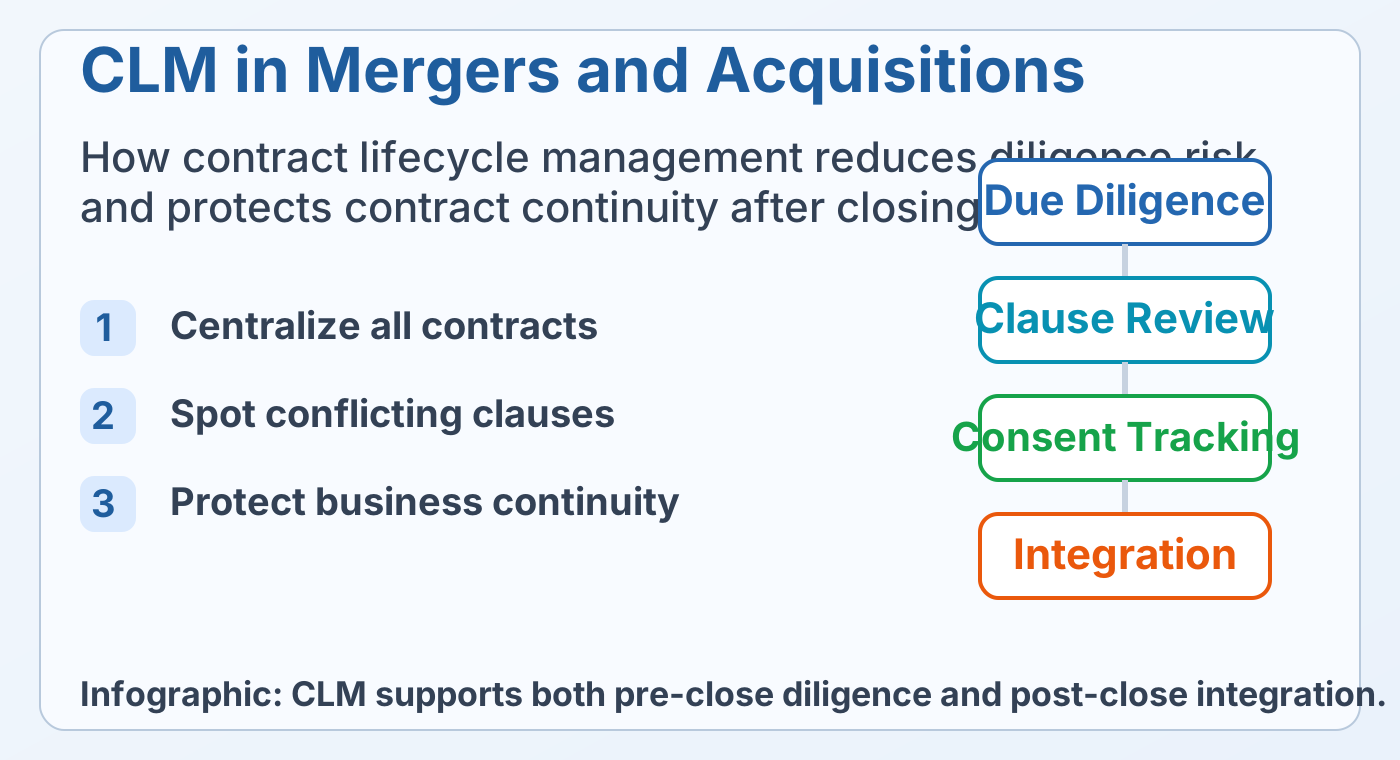
Contracts influence deal value
Every acquisition model depends on assumptions about revenue, supplier stability, compliance exposure, and synergy potential. Those assumptions are written into contracts, not just financial models.
Visibility gaps create risk
Many M&A teams do not struggle because they lack documents. They struggle because documents are fragmented, outdated, or hard to validate. A contract repository software approach turns scattered files into searchable business records.
CLM adds structure early
A spreadsheet can list agreements, but it cannot act as a contract data management system. Modern contract management systems capture status, metadata, key clauses, dates, and obligations in one controlled environment. Enterprise contract lifecycle management software becomes especially valuable when multiple teams need one source of truth.
References: CAMARC Home | CAMARC CLM Guide | Bloomberg Law checklist
Build a centralized contract foundation before the deal accelerates.
CLM During Due Diligence
Start with contract intake
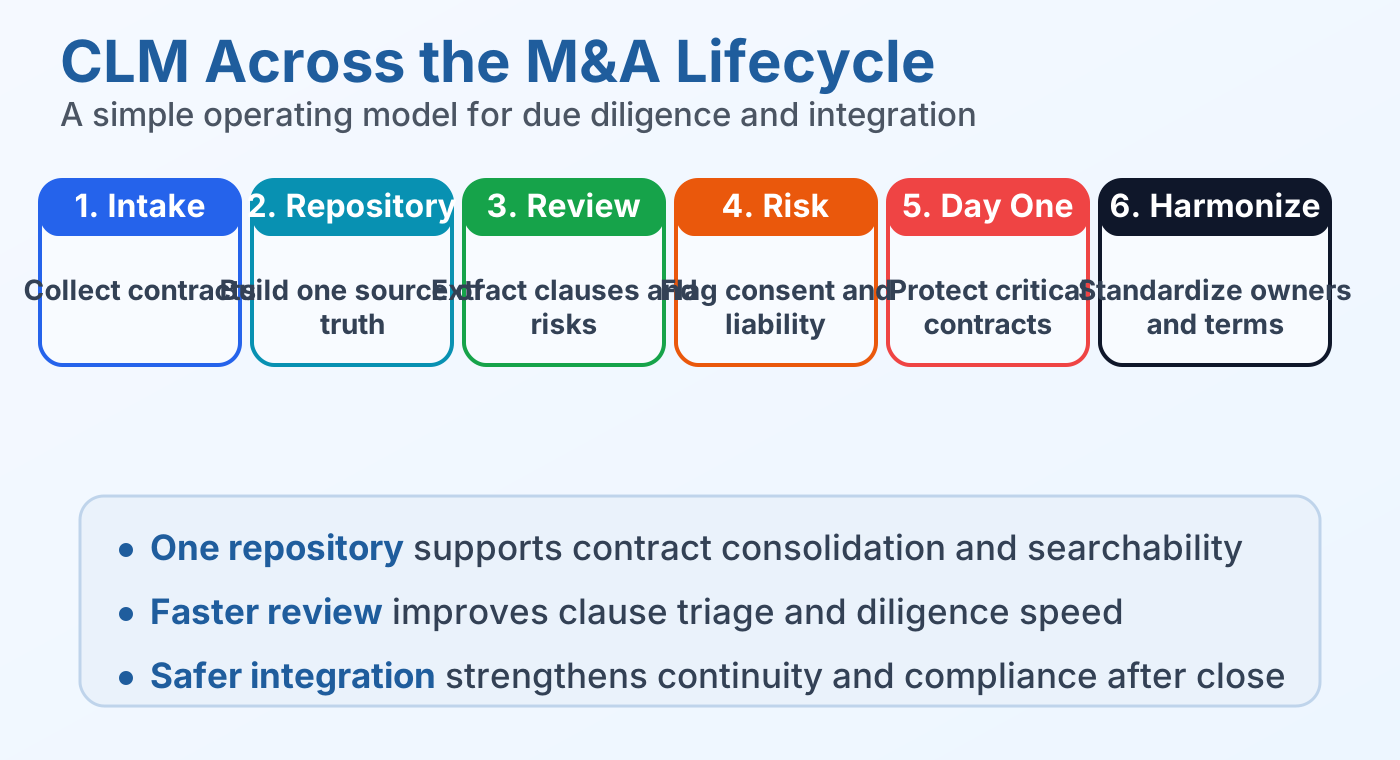
The first diligence task is contract intake and inventory. Teams need to collect material agreements, amendments, exhibits, and executed copies in one place. Contract repository tools create order and reduce early confusion.
Use contract analysis at scale
The goal of legal due diligence is to find what changes value, risk, and integration complexity. That requires contract analysis software and legal contract analysis software that can surface important terms across large portfolios.
Review the clauses that matter most
Deal teams typically focus on change-of-control language, assignment restrictions, exclusivity terms, termination rights, pricing commitments, auto-renewals, data obligations, liability caps, and indemnities.
Turn documents into action
A contract document management system should do more than store PDFs. It should make obligations visible, assign owners, and track deadlines before closing. This is where contract risk management becomes practical.
Why enterprise CLM helps
Enterprise contract lifecycle management software combines repository control, workflow automation, extraction, dashboards, and traceability. CAMARC follows this model through centralized workflows and role-based governance.
- Counterparty, contract type, value, term dates, renewal rules, and notice periods
- Change-of-control and assignment clauses that may require approval
- Pricing, rebate, exclusivity, and service level commitments
- Indemnity, liability, insurance, data, and compliance obligations
- Open milestones, amendments, side letters, and unresolved obligations
References: Thomson Reuters | Bloomberg Law | CAMARC AI in Contract Management
Speed up legal due diligence with structured contract review.
CLM During Post-Merger Integration
Unify the repository
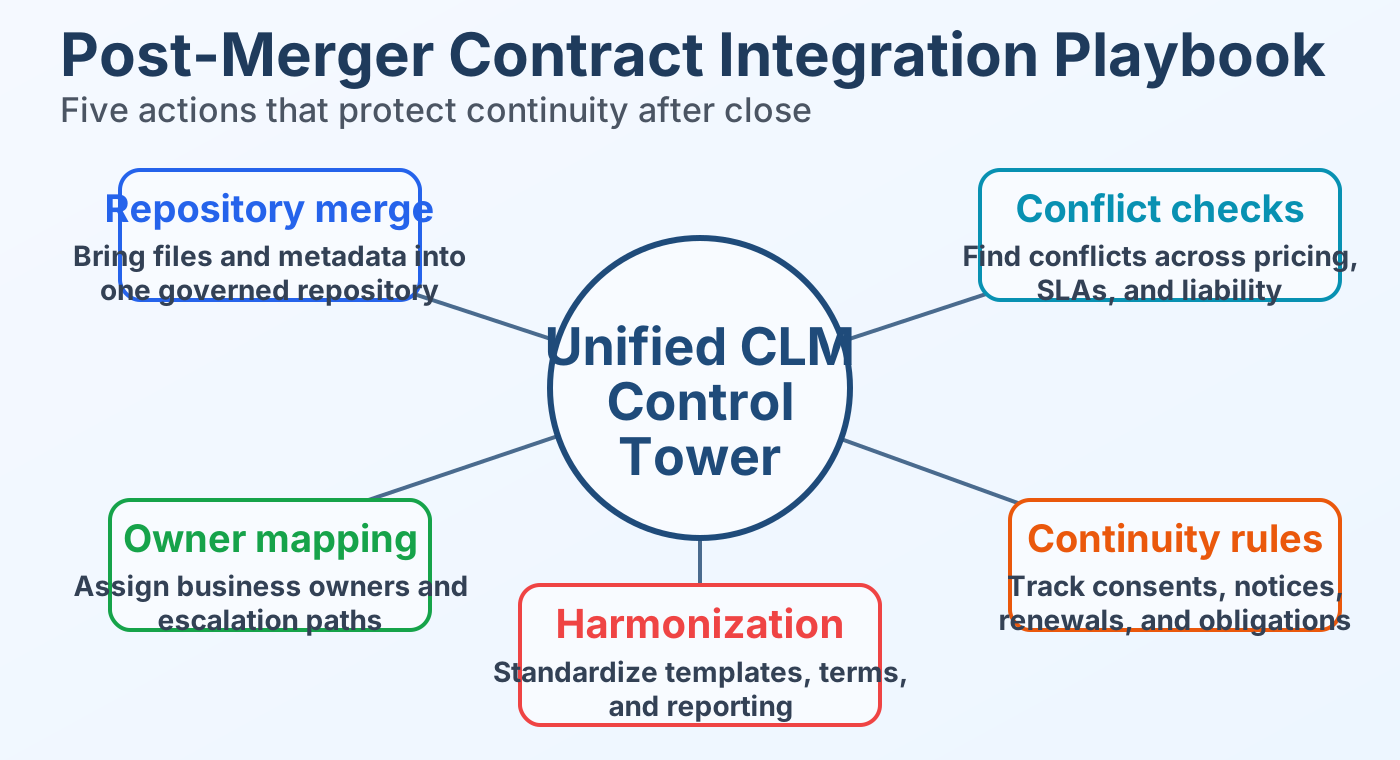
After the deal, the combined company must merge legacy repositories and validate which agreements are live and enforceable. A contract repository software strategy brings executed contracts, amendments, notices, and metadata into one governed environment.
Find conflicting clauses
Merged businesses often carry overlapping vendors and conflicting commitments. Contract analysis software helps identify conflicts across pricing, SLA, liability, and consent terms.
Protect continuity on Day One
Some agreements require notices, consents, novations, or assignment steps after close. Contract compliance management keeps these requirements visible and owned.
Standardize the operating model
The new business needs one ownership model, one reporting layer, and one approval structure. A mature contract lifecycle management system supports these changes through workflow and governance.
Why CAMARC fits post-close needs
CAMARC capabilities are relevant to integration teams: centralized workflows, document collaboration, dashboards, compliance tracking, audit trails, and role-based access control.
- Which contracts are critical to revenue, supply, occupancy, or regulated operations?
- Which agreements require notice, consent, novation, or assignment?
- Which clauses conflict across the combined portfolio?
- Which obligations, renewals, or payments are due in 30, 60, and 90 days?
- Who owns each active agreement and where is the authoritative executed copy?
References: Deloitte Day One readiness | CAMARC About | CAMARC Home
Protect continuity after close with one source of truth.
Business Value for Decision Makers
For executives
CLM reduces surprises and improves control. It shortens time spent hunting for documents and increases time spent acting on business issues.
For legal teams
Structured CLM supports consistent legal due diligence and clearer escalation of material issues, with stronger audit trails.
For procurement, finance, and operations
CLM protects supply continuity, highlights duplicate vendors, and improves visibility into obligations, renewals, and payment triggers.
For long-term growth
Serial acquirers need repeatable systems, not one-off cleanup projects. Legal contract management software supports future diligence cycles and governance.
- Reduce deal friction by centralizing information before and after close
- Improve contract compliance management across the combined company
- Lower exposure by prioritizing clause-level risks and ownership gaps
- Speed reporting with one contract data management system and one dashboard view
- Build a repeatable integration playbook for future acquisitions
References: CAMARC CLM Software | CAMARC Contract Management Tools | Deloitte Day One readiness
Create an M&A-ready contract operating model.
Frequently Asked Questions
What is CLM in mergers and acquisitions?
CLM in M&A is the use of a contract lifecycle management system to organize, review, track, and govern contracts before and after a deal.
Why is legal due diligence important in M&A?
It surfaces obligations and restrictions that can affect valuation, deal terms, and post-close integration risk.
How does contract repository software help after a merger?
It gives one source of truth for executed contracts, amendments, metadata, and key dates across the combined business.
What should contract review software flag during M&A?
Consent requirements, termination rights, exclusivity, pricing terms, service levels, data terms, indemnities, and liability caps.
What makes enterprise CLM useful for serial acquirers?
Repeatable workflows, controls, and reporting that scale across multiple transactions and integrations.
Conclusion
In M&A, contracts are not side paperwork. They are one of the clearest indicators of operational reality, legal exposure, and integration effort.
The faster teams can centralize, review, compare, and govern agreements, the better they can protect deal value.
With the right repository, workflow, analysis, and compliance model, organizations move from document confusion to confident integration.
Next Steps with CAMARC
- CTA 5: See how CAMARC centralizes requests, approvals, execution, and tracking.Request a demo →
- CTA 6: Review CLM capabilities from repository control to obligation tracking.Explore CLM capabilities →
- CTA 7: Use CAMARC articles and guides to evaluate modern CLM operations.Browse articles → Browse guides →
- CTA 8: If preparing for diligence or post-close integration, design a scalable governance approach.Visit CAMARC → About the platform →