Choosing Between SaaS and On-Premise CLM Solutions
Why deployment choice matters
The decision is more than technical
Deployment affects how quickly teams go live, how users access contracts, and who owns platform support. It also shapes long-term flexibility for contract management systems and related workflows.
What SaaS means in CLM
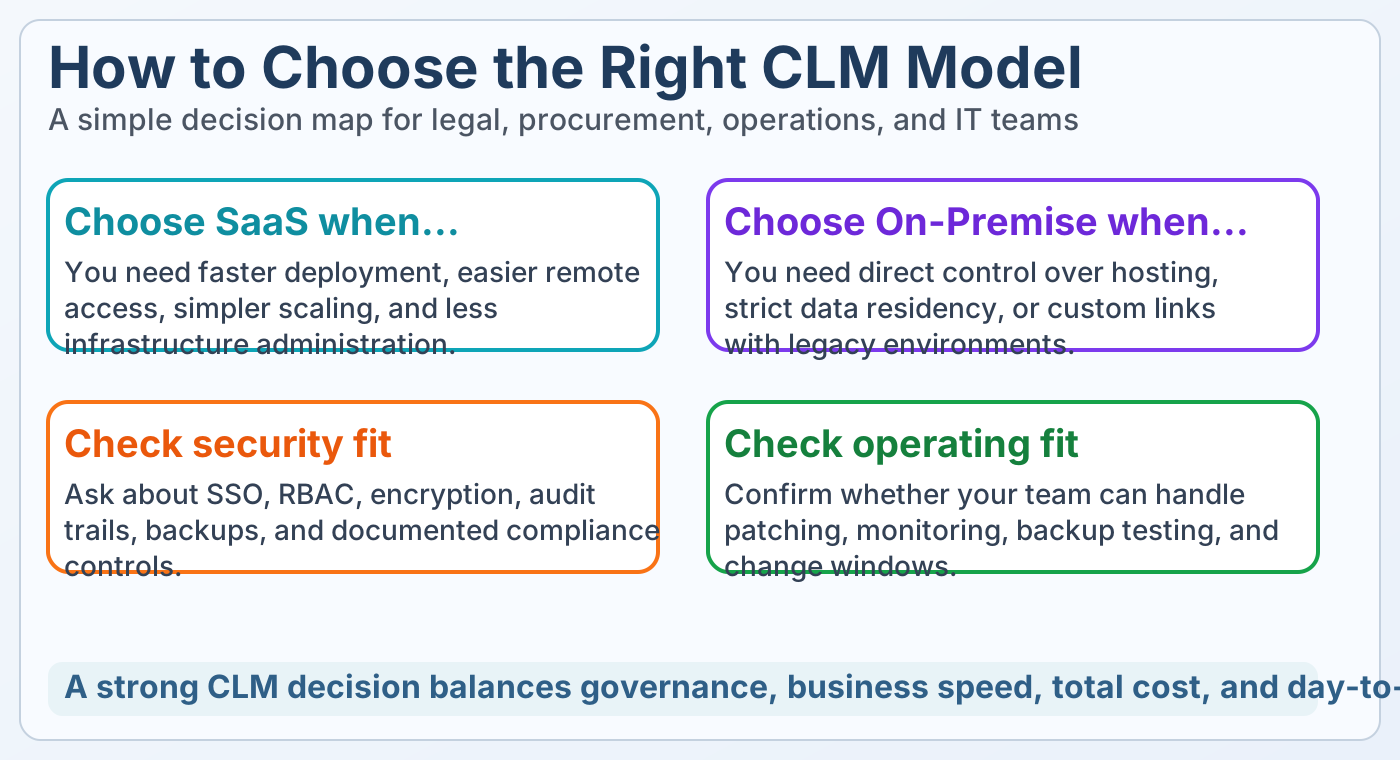
In a contract management software SaaS model, the vendor hosts the application and manages most platform updates. This makes cloud deployments appealing for businesses that want faster implementation and easier remote access.
What on-premise means in CLM
An on-premise contract lifecycle management system runs in infrastructure your organization controls. This model can fit strict data locality rules, legacy dependencies, or deep customization needs, but requires stronger internal support.
How to frame the choice
If speed, agility, and lower setup effort matter most, SaaS often wins. If direct environment control and specialized infrastructure policies matter most, on-premise may still be the better path.
Reference: CAMARC Homepage | CAMARC About
Security and compliance
Contracts hold pricing, obligations, renewal terms, and sensitive commitments, so security is usually the first major deployment question.
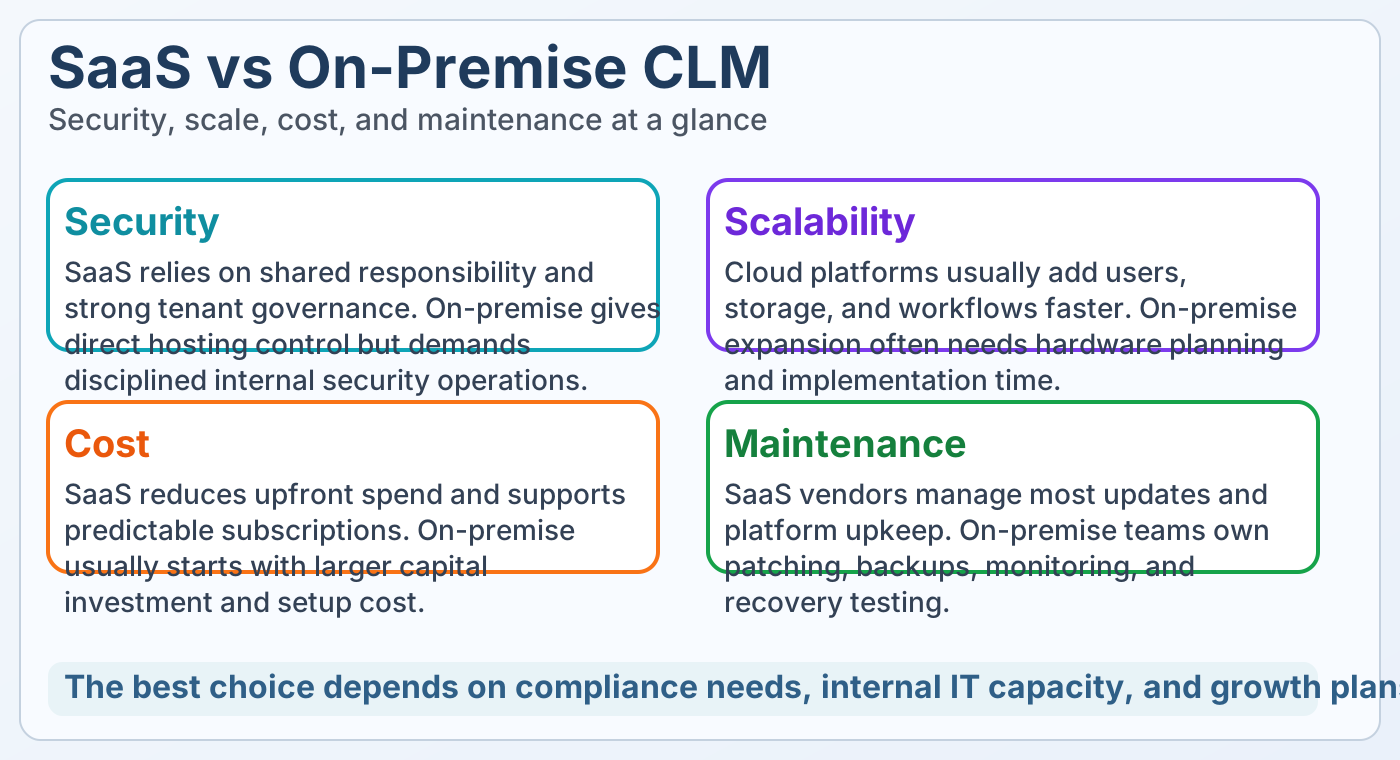
In cloud deployments, providers manage underlying platforms while your team still governs tenant policies and access controls. A secure rollout depends on both sides of shared responsibility.
A strong cloud based contract management system should support SSO, RBAC, audit trails, encryption, and backup practices. On-premise can help where direct hosting control is required, but it still depends on internal patching, monitoring, and recovery discipline.
Reference: NSA shared responsibility | NIST SP 800-210 | Microsoft shared responsibility
CTA 1: Need a secure CLM baseline?
Explore how CAMARC supports role-based access, workflow governance, audit trails, and centralized visibility for contract operations.
View CAMARC featuresScalability and performance
Contract volume rarely stays flat. Growth, acquisitions, and policy changes quickly add users, templates, and approvals.
Cloud deployments usually scale faster by adding users, storage, and workflows without waiting for hardware procurement. They also support distributed teams in one electronic contract management system.
On-premise can scale, but usually with higher effort and longer timelines. Cloud-first platforms also tend to deliver innovation updates faster.
Reference: CAMARC Homepage | CAMARC CLM Guide
CTA 2: Planning for growth?
See how CAMARC centralizes requests, approvals, tracking, dashboards, and obligation management as contract volume increases.
Read the CAMARC CLM guideCost and total ownership
SaaS is not always cheaper, and on-premise is not always more expensive. The better comparison is total ownership over time, including operational and business impact.
SaaS usually lowers upfront spending and shifts cost toward predictable subscription expense. On-premise often starts higher due to infrastructure, setup, and administration.
Hidden cost drivers include slow approvals, missed renewals, weak searchability, and manual handoffs. Evaluate value through cycle time, compliance, visibility, and operational effort, not licenses alone.
Reference: Microsoft FinOps TCO | CAMARC Analysis Tools Guide
CTA 3: Compare value, not just price
Review CLM options through cycle time, compliance, renewal visibility, and operational effort.
Start with CAMARC resourcesMaintenance and operations
Maintenance is where deployment differences become obvious. In SaaS, providers usually manage upgrades, patches, and platform monitoring. Internal teams can focus on policy, adoption, and reporting.
With on-premise CLM, internal teams own server upkeep, patching, backups, monitoring, and disaster recovery testing. If these are inconsistent, the platform can become fragile over time.
A modern integrated contract management system often connects with CRM, BI, e-signature, document storage, and identity tools, so ongoing upkeep is part of deployment fit.
Reference: CAMARC Homepage | CAMARC About
CTA 4: Want less manual contract administration?
Explore whether CAMARC can support your team with automation, collaboration, dashboards, and e-signature support.
Explore CAMARCBusiness value for decision makers
Leaders should judge deployment by outcomes, not labels. The winning model is the one that accelerates contracts while reducing risk and support burden.
For finance leaders, SaaS can mean lower upfront spend and faster time to value. For legal and procurement teams, it can improve auditability, collaboration, and renewal control. For CIOs, the core question is governance fit and support capacity.
Reference: CAMARC About | Microsoft FinOps TCO
How CAMARC supports modern CLM
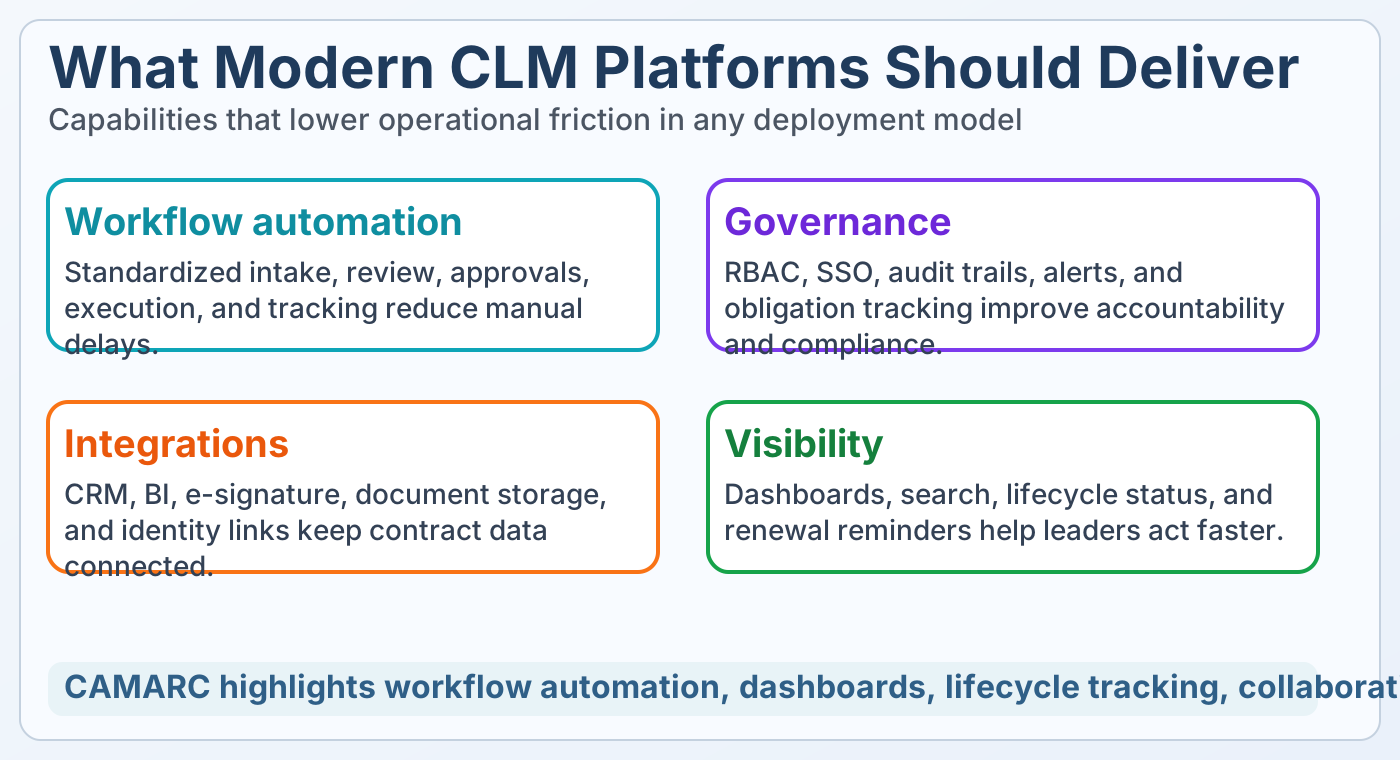
CAMARC presents a contract lifecycle management solution that centralizes requests, approvals, execution, tracking, and compliance. Public capabilities highlight workflow automation, collaboration, dashboards, audit trails, obligation tracking, and e-signature support.
These capabilities matter because CLM value comes from workflow structure, governance, visibility, and integration, not static document storage.
If you are comparing deployment models, evaluate whether the platform improves the full lifecycle while staying secure and manageable.
Reference: CAMARC Homepage | CAMARC About
Frequently asked questions
What is the difference between SaaS CLM and on-premise CLM?
SaaS CLM is hosted by the vendor and accessed online. On-premise CLM is hosted in infrastructure your organization controls.
Is a cloud based contract management system secure enough for enterprise use?
Yes, when the platform and your governance model support strong controls including SSO, RBAC, audit trails, encryption, and backup practices.
When does on-premise CLM make sense?
When direct control over hosting and data location is mandatory, and internal support is mature enough to maintain the environment consistently.
Which model scales better for fast-growing teams?
In most cases SaaS scales faster by expanding users, storage, and workflows without local infrastructure changes.
How should we compare cost between both models?
Compare total ownership, including IT labor, infrastructure, upgrades, support, and the business cost of slow contract operations.
Conclusion
Choosing between SaaS and on-premise CLM is a decision about control, speed, cost, and operating effort. Cloud often wins on scalability and maintenance ease. On-premise remains relevant when strict infrastructure control is non-negotiable.
The best contract management software is the one that matches your compliance requirements, business model, and support capacity.
Next steps
- CTA 5: Request a product walkthrough.Request a demo →
- CTA 6: Review practical guides before finalizing your shortlist.Browse CAMARC guides →
- CTA 7: Validate deployment fit against modern CLM architecture.Learn about CAMARC →
- CTA 8: Replace spreadsheet and email chaos with standardized workflows.Visit CAMARC →