Digital Transformation in Contracting: A Practical Roadmap to Modern CLM
Contracts influence procurement, legal review, finance, vendor management, and project delivery. Yet many organizations still manage them through email threads, spreadsheets, disconnected folders, and manual reminders. That approach may work at low volume, but it slows approvals, weakens visibility, increases compliance risk, and makes scale harder than it should be.
Digital transformation in contracting shifts agreements from static files to a governed digital workflow. Instead of relying on email chains and manual follow-ups, teams use an electronic contract management system for intake, approvals, a searchable repository, dashboards, and e-signature workflows. The result is a lifecycle that is faster, more consistent, and easier to control.
For teams evaluating a modern contract management platform, this guide explains what digital transformation in contracting means, why manual methods break down, how to modernize step by step, and where CAMARC fits as a practical contract lifecycle management software solution.
Definition: Digital transformation in contracting is the shift from email-and-spreadsheet workflows to a governed, end-to-end CLM process including intake, review, approvals, e-signature, storage, and post-signature tracking in one system.
Still chasing approvals in email and tracking contracts in spreadsheets? Explore how CAMARC centralizes requests, approvals, execution, and reporting in one governed workspace.
Explore CAMARCWhat Digital Transformation in Contracting Means
Digital transformation in contracting is the move from fragmented, manual workflows to a connected digital operating model. In practice, it means using contract management software to standardize intake, automate routing, centralize documents, support collaboration, capture digital signatures, and monitor obligations after execution. It is not just about storing PDFs in the cloud. It is about making the full lifecycle visible, controlled, and easier to improve over time.
A mature digital contract model usually combines several capabilities: a cloud based contract management system for centralized access, an automated contract management system for approvals and reminders, contract management tools for collaboration and search, and analytics that show where bottlenecks or risks are building. Modern contract management systems also support audit trails, role-based access, and configurable workflows so contracts move according to business rules instead of informal follow-up.
| Capability | What it improves |
|---|---|
| Centralized repository | One searchable source of truth for contracts and related files |
| Workflow automation | Faster routing, approval tracking, and fewer manual handoffs |
| Digital signature contract flows | Faster execution without printing or scanning |
| Dashboards and analytics | Better visibility into status, cycle time, and bottlenecks |
| Governance and audit trail | Stronger compliance, traceability, and role-based control |
References: CAMARC homepage, Benefits of Contract Lifecycle Management Software
Why Manual Contracting Breaks at Scale
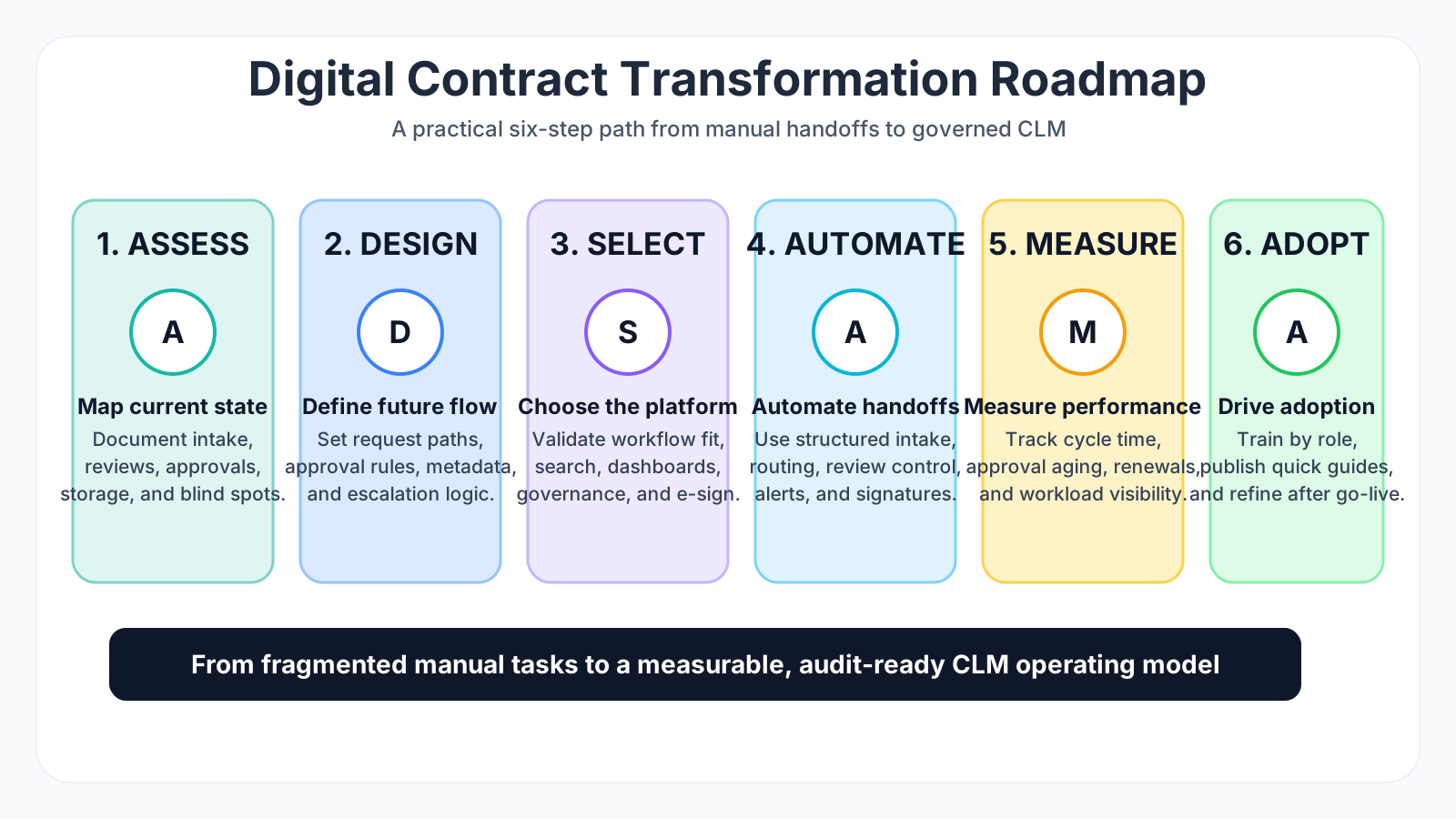
Manual contracting often survives because people work around its weaknesses. Someone remembers to follow up on an approval. Someone else updates a spreadsheet. A third person searches email for the latest version. As volume grows, that model becomes fragile. Delays become normal, ownership gets blurry, and reporting turns reactive.
The problem is not only inefficiency. Manual processes make it harder to enforce template standards, prove approval history, manage renewals, or respond quickly when leadership asks for status. Even when teams use shared folders or basic storage, they still lack the orchestration needed for a healthy process.
| Area | Manual model | Digital model |
|---|---|---|
| Request intake | Email or informal requests | Structured forms with required data |
| Approvals | Manual reminders | Automated routing and status tracking |
| Documents | Attachments and shared folders | Version-controlled repository |
| Execution | Print, scan, or disconnected e-sign | Embedded digital signature workflows |
| Reporting | Spreadsheet updates | Real-time dashboards |
| Compliance | Hard to verify consistently | Audit trail and controlled access |
Microsoft's contract lifecycle scenarios reinforce the same pattern: renewal alerts, approval routing, approval tracking, validation, and repository management are central to modernizing the contracting workflow. CAMARC's resources similarly focus on visibility, automation, collaboration, and obligation tracking as the foundation of better contract operations.
References: Microsoft Adoption contract lifecycle scenarios, Best CLM Software Guide
If contracting delays are slowing business outcomes, the process may need redesign, not more reminders. Review how CAMARC's CLM approach supports faster routing, stronger visibility, and better control.
Contact UsStep-by-Step Roadmap to a Digital Contracting Model
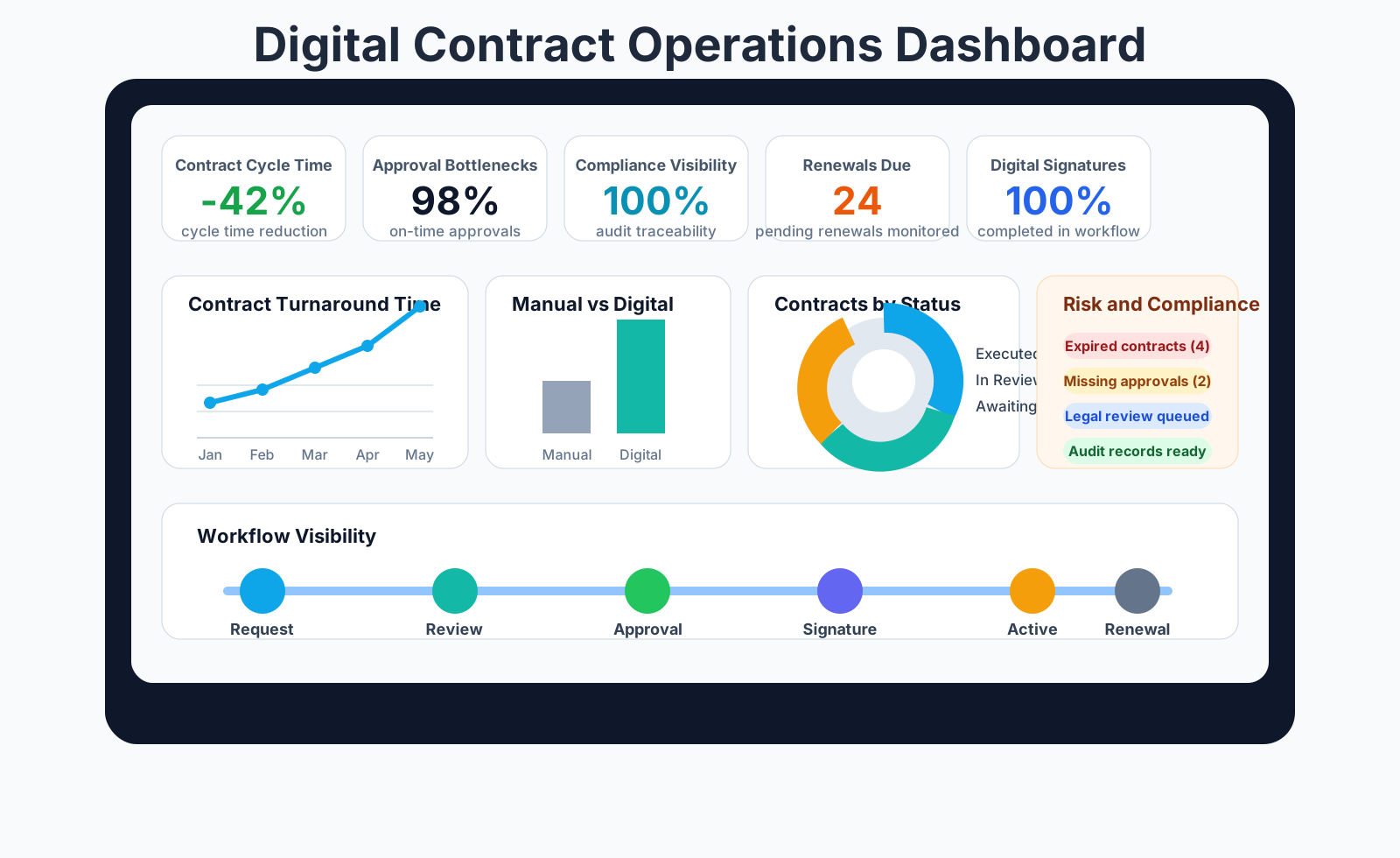
Digital transformation in contracting works best when it is phased. The goal is not to digitize chaos. The goal is to redesign the process, then support it with the right contract management solutions, governance, and adoption plan.
Step 1: Assess the current contract management process
Map the current state from request to execution. Document who submits requests, who reviews them, how approvals are triggered, where files live, how signatures are collected, and how executed contracts are tracked.
What to do: List the major contract types your team handles, identify each stage from request to execution, record where delays usually happen, note which steps rely on email follow-up or manual tracking, and capture what leadership cannot see today such as approval aging or renewal exposure.
Expected outcome: A baseline of friction points, process gaps, and reporting blind spots.
Step 2: Design the future-state workflow
Define the target workflow before you automate. This includes structured intake, approval rules, review steps, signature requirements, repository design, and post-signature tracking.
What to do: Define request paths by contract type, value, or risk, assign approvers and reviewers by role, standardize where executed contracts will be stored, decide what metadata must be captured for reporting, and document escalation rules for stalled approvals.
Expected outcome: A standardized operating model that can be translated into workflow rules.
Step 3: Select the right contract management platform
A strong contract management platform should do more than store files. It should support a complete digital contract process with repository management, configurable workflows, collaboration controls, digital signature support, dashboards, and role-based governance. A contract management cloud model is especially valuable because it supports distributed teams without sacrificing visibility.
What to do: Evaluate platforms against workflow, reporting, security, and usability needs, check whether the solution supports digital signature contract flows, review dashboard and analytics capabilities, confirm how search, metadata, and audit history are handled, and prioritize tools that match your real approval structure.
Expected outcome: A platform shortlist based on operational fit, not feature volume.
Step 4: Automate intake, approvals, and execution
After platform selection, automate the highest-friction steps first. Replace manual request emails with structured forms, route contracts based on business rules, enable controlled review collaboration, and embed e-signature workflows. This is where an automated contract management system begins to deliver immediate value.
What to do: Replace manual request emails with a guided intake form, route requests automatically to the right stakeholders, enable visible version control during review, trigger digital signatures when approval conditions are met, and apply alerts for pending approvals, deadlines, and renewals.
Expected outcome: Faster movement across the lifecycle with fewer manual handoffs.
Step 5: Add reporting and operational visibility
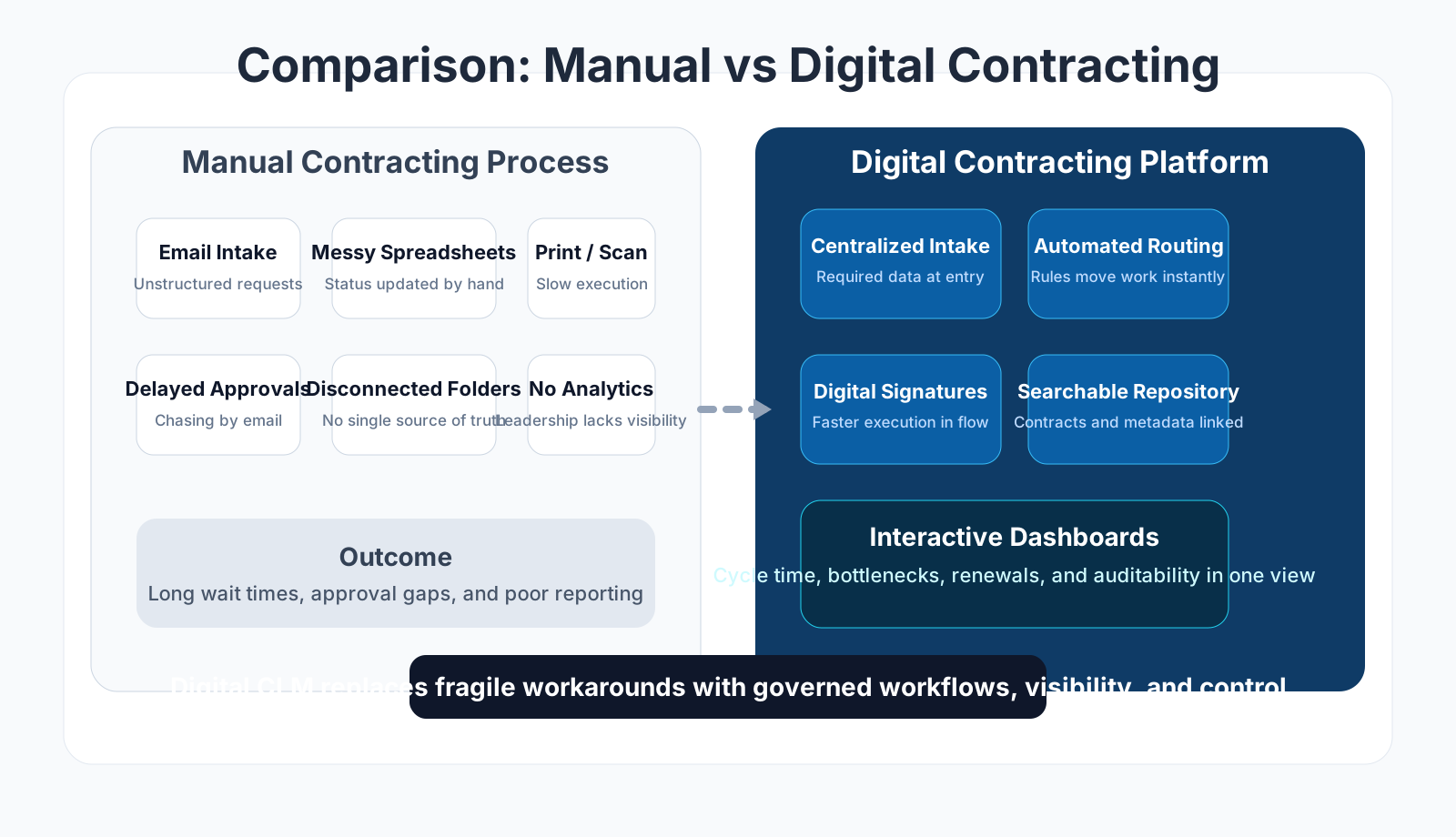
Reporting should show contracts by stage, approval aging, cycle-time trends, upcoming obligations, and workload by owner or team. This turns contract software management from reactive administration into a measurable business function.
What to do: Define the KPIs leadership and operations teams need, build dashboards for stage visibility, aging, and bottlenecks, track renewals, obligations, and exception patterns, and review dashboard usage regularly after go-live.
Expected outcome: Better decisions, earlier intervention, and clearer accountability.
Step 6: Roll out with adoption and governance in mind
Even the best contract management applications will underperform if users keep working around them. Rollout should therefore include role-based training, quick-reference guides, clear ownership, and governance policies that prevent old habits from reappearing.
What to do: Train requestors, reviewers, approvers, and admins separately, publish simple how-to guidance for common tasks, monitor adoption and failed workflow points after launch, and refine rules, dashboards, and notifications as usage matures.
Expected outcome: A sustainable contract management model that people actually use.
| Phase | Primary goal | Business outcome |
|---|---|---|
| Assess | Understand current-state friction | Clear baseline and priorities |
| Design | Build the target workflow | Standardized process |
| Select | Choose the right solution | Scalable digital foundation |
| Automate | Streamline routing and execution | Faster cycle times |
| Measure | Add reporting and visibility | Better decisions and control |
| Adopt | Train and govern the rollout | Long-term usage and consistency |
References: Microsoft Adoption manufacturing contract lifecycle scenarios, Best CLM Software Guide, CAMARC homepage
Need a practical path from manual workflows to a cloud based contract management system? See how CAMARC supports end-to-end control across request, review, execution, dashboards, and auditability.
See How CAMARC WorksBusiness Value of Modern Contract Management
A modern contract management cloud environment does more than speed up paperwork. It improves discipline across the business. Contracts influence legal review, procurement timelines, vendor performance, commercial risk, and revenue operations. When the process becomes digital, those outcomes become easier to manage.
| Business area | Value delivered |
|---|---|
| Cycle time | Faster request-to-signature completion |
| Risk | Fewer missed approvals, renewals, and obligations |
| Compliance | Better traceability, version control, and policy enforcement |
| Productivity | Less manual chasing and fewer status-check emails |
| Visibility | Real-time reporting for operations and leadership |
| Scalability | Standardized workflows that grow with contract volume |
Organizations also gain stronger cross-functional alignment. Instead of each team maintaining its own spreadsheet or folder logic, everyone works from a shared system of record. That is one reason contract management services, contract management solutions, and enterprise-wide contract management applications are increasingly tied to broader digital transformation programs rather than isolated legal tech projects.
References: Benefits of Contract Lifecycle Management Software, Contract Management and Analysis Tools
Why CAMARC Fits the Transformation Journey
CAMARC supports the operational needs that come with digital transformation in contracting: structured intake, workflow automation, real-time collaboration, obligation visibility, digital execution, and governed access. Rather than acting as simple storage, it helps teams run a consistent lifecycle from request to signature with clearer control and less friction.
If you are comparing CLM options, focus on how well each system supports standardization, visibility, and governance at scale. CAMARC is designed for teams that want a practical workflow-first approach without stitching together fragmented tools.
References: CAMARC homepage, About CAMARC, AI in Contract Management
Looking for a contract management platform that supports digital transformation without fragmented tools? Visit CAMARC or explore AI in Contract Management for the next step.
Governance and Adoption Best Practices
Digital transformation succeeds when governance and adoption are treated as part of the design, not as cleanup work after deployment. Teams need clear ownership, defined workflows, usable templates, and training that reflects how different roles interact with contracts.
- Start with the highest-friction contract process so users see value quickly.
- Standardize intake fields, templates, and approval rules before rollout.
- Train by role instead of using one generic enablement session.
- Publish quick guides for requestors, reviewers, and approvers.
- Review dashboard data after go-live and refine where users still get stuck.
- Tie the new process to business outcomes such as speed, compliance, and visibility.
A digital contracting initiative lasts when the system becomes easier to use than the workaround.
References: Microsoft Adoption contract lifecycle scenarios, Best CLM Software Guide
FAQs
1. What is digital transformation in contracting?
It is the shift from manual, paper-based, and email-driven contract workflows to a connected digital model using contract management software, automation, and cloud-based collaboration.
2. What is the difference between a digital contract process and document storage?
Document storage keeps files in one place. A digital contract process adds intake, routing, approvals, version control, digital signatures, reporting, and governance.
3. Why do organizations invest in a cloud based contract management system?
Because it centralizes contracts, supports distributed teams, improves visibility, and makes approvals, execution, and reporting easier to manage in one environment.
4. What should an automated contract management system include?
At minimum, it should support intake, workflow routing, repository management, audit trails, alerts, dashboards, and digital signature workflows.
5. How does digital transformation improve the contract management process?
It reduces delays, increases visibility, strengthens compliance, and gives teams a shared system of record across the full contract lifecycle.