Data Security & Privacy in CLM Systems: What Contract Teams Need to Know
Contracts are among the most sensitive documents an organization produces. They contain pricing arrangements, proprietary terms, personal data, strategic obligations, and counterparty information that can become a serious liability if exposed or mishandled. Yet many teams still manage contracts through shared drives, email attachments, and systems that were never designed with security governance in mind.
A secure contract lifecycle management system changes that. It enforces access controls, maintains tamper-proof records, supports regulatory compliance workflows, and protects data at every stage from request through post-signature obligation management. For organizations that work with regulated data, sensitive commercial terms, or cross-border agreements, security and privacy capabilities in CLM are not optional features. They are operational requirements.
This guide explains what data security and privacy mean in the context of CLM systems, which capabilities matter most, how to evaluate them, and how CAMARC approaches secure contract governance.
TL;DR: Secure CLM systems protect contract data through encryption, role-based access control, audit trails, privacy compliance workflows, and cloud governance. Together, these capabilities reduce breach risk, demonstrate regulatory accountability, and give leadership full visibility into who touched every contract and when.
Managing contracts through email or shared drives? Explore how CAMARC enforces access control, audit trails, and governance across every stage of the contract lifecycle.
Explore CAMARCWhy Data Security Matters in Contract Management
Contracts are not just administrative records. They bind parties to financial commitments, performance obligations, confidentiality requirements, and regulatory compliance conditions. When contract data is exposed through weak access controls, version confusion, unauthorized edits, or insecure transmission, the consequences reach well beyond IT. They include commercial risk, regulatory penalty, reputational harm, and legal liability.
Organizations in healthcare, financial services, real estate, and technology face particularly high exposure because their contracts contain protected health information, personally identifiable data, or commercially sensitive pricing that is subject to strict regulatory treatment. But even organizations outside regulated industries carry risk when contracts are mishandled because the underlying relationships, obligations, and terms are valuable assets that require protection.
Manual contract processes make this worse. Email attachments bypassed by the wrong recipient, shared folders with no access tiers, and unsigned changes with no audit record are common in organizations that have not yet adopted a governed CLM system. A secure contract lifecycle management platform eliminates most of these exposure points by design.
| Security gap | Risk it creates |
|---|---|
| No access control | Unauthorized users can read or modify sensitive contract terms |
| No encryption | Data intercepted in transit or at rest is readable without decryption keys |
| No audit trail | Disputes and audits cannot be resolved with a complete record of who did what |
| No retention policy | Regulatory obligations for data deletion or preservation cannot be met |
| No approval workflow | Contracts move informally outside the governed system, creating shadow agreements |
References: AI in Contract Management, Benefits of Contract Lifecycle Management Software
Core Security Capabilities in a Secure CLM System
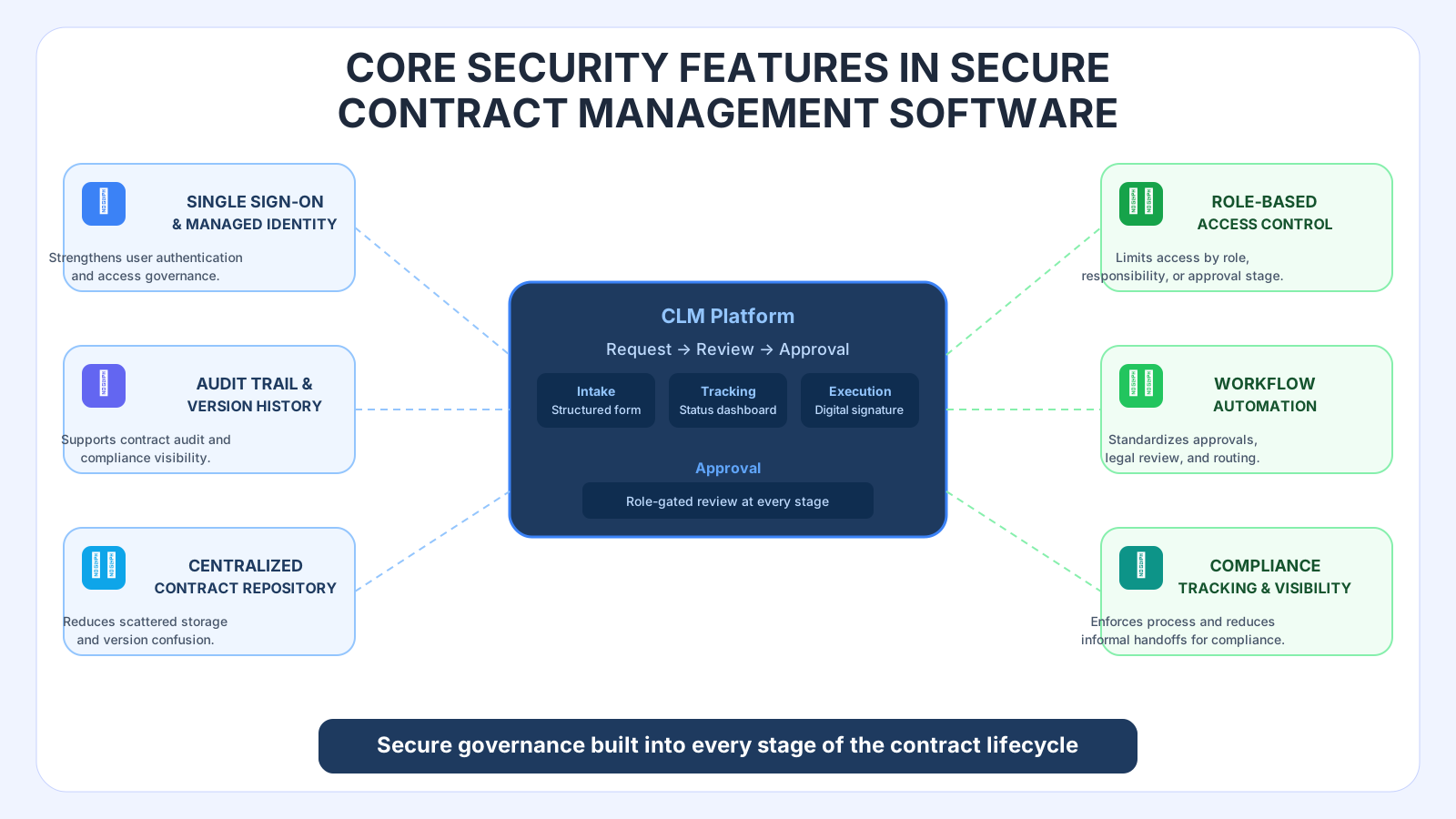
Not all CLM platforms treat security the same way. Some offer basic password protection and folder sharing. Others enforce role-based access, encrypt data at multiple layers, and provide full audit history on every action. The gap between those two approaches is significant.
The following capabilities are the standard for a genuinely secure contract lifecycle management environment:
Data Encryption
Contracts should be encrypted both at rest and in transit. AES-256 encryption protects files stored in the system. TLS 1.3 protects data moving between the user and the platform. This prevents interception even if the underlying network or storage layer is compromised. Organizations in regulated industries should confirm that their CLM vendor maintains encryption consistently across all storage tiers including backups and archives.
Role-Based Access Control (RBAC)
RBAC limits what each user can do based on their role, team, and position in the approval workflow. A requestor submitting a contract should not be able to approve it or download it after execution without explicit permission. A legal reviewer should see the contract but may not need access to pricing terms. A finance contact may need post-signature data without editing rights. Properly structured RBAC enforces these distinctions automatically.
Strong RBAC also supports the least-privilege principle: users receive only the minimum permissions required to do their job. This limits the blast radius if an account is compromised or a user changes roles.
Single Sign-On and Identity Management
Integration with enterprise identity providers through SAML or OAuth enables centralized authentication. Users access the CLM system through the same credentials managed by the organization's identity platform. This means access is automatically revoked when an employee leaves, without requiring separate offboarding in the contract system. It also simplifies management of multi-factor authentication requirements.
Workflow Controls and Approval Gating
Security does not only protect stored data. It also governs how contracts move. A secure CLM system enforces stage-gated approval workflows so contracts cannot advance to execution without completing required review steps. This prevents unsigned contracts from being distributed, unapproved terms from being committed, and informal handoffs from bypassing the governed process.
| Capability | Security function | Business outcome |
|---|---|---|
| Data encryption | Protects stored and transmitted contract data | Reduces breach exposure at the storage layer |
| RBAC | Limits access by role and approval stage | Prevents unauthorized viewing or editing |
| SSO and identity | Centralizes authentication and revocation | Faster offboarding and policy enforcement |
| Approval gating | Enforces workflow rules before execution | No contract advances without formal sign-off |
| Audit trail | Logs every action with timestamp and user ID | Full accountability for disputes and audits |
| Document controls | Restricts download, print, and sharing | Reduces unauthorized distribution |
References: CAMARC homepage, Benefits of Contract Lifecycle Management Software
Privacy Compliance: GDPR, CCPA, and HIPAA in CLM
Privacy regulations impose specific obligations on how organizations collect, process, store, and delete personal data. Contracts frequently contain personal data, whether names and contact information of counterparties, health information in vendor agreements, or consumer data in service contracts. That makes the CLM system itself a data processor under many regulatory frameworks.
GDPR Requirements for Contract Systems
The General Data Protection Regulation applies to any organization handling personal data of EU residents. In the context of CLM, this means the platform must support data subject access requests, the right to erasure, defined retention periods, and the ability to demonstrate lawful processing for each category of personal data stored in contracts. The system must also support data processing agreements with any sub-processors, including the CLM vendor itself.
CCPA Considerations
The California Consumer Privacy Act adds requirements for organizations doing business in California to disclose what personal data they collect and provide opt-out and deletion mechanisms. If contracts with California consumers are stored in the CLM platform, the system's retention and deletion capabilities must support compliance with CCPA deletion requests and data mapping obligations.
HIPAA in Healthcare Contracting
Healthcare organizations and their business associates must sign Business Associate Agreements with any vendor storing, processing, or transmitting protected health information. CLM vendors serving healthcare clients need to offer HIPAA-compliant infrastructure, including physical security, access controls, audit logging, and encrypted transmission. Even vendor agreements that reference PHI indirectly may require HIPAA-compliant handling.
If your contracts contain regulated personal data, your CLM system needs to support more than storage. See how CAMARC approaches compliance-ready contract governance.
Talk to Our Team| Regulation | Key CLM requirement | Risk if ignored |
|---|---|---|
| GDPR | Data subject rights, retention policies, BAA with vendor | Fines up to 4% of global annual revenue |
| CCPA | Data mapping, opt-out support, deletion workflows | Statutory damages and regulatory action |
| HIPAA | BAA with CLM vendor, encrypted PHI storage, access logs | Significant civil and criminal penalties |
| SOC 2 | Vendor certification of security, availability, and confidentiality controls | Audit failure, procurement risk, customer trust loss |
Cloud Governance and Infrastructure Security
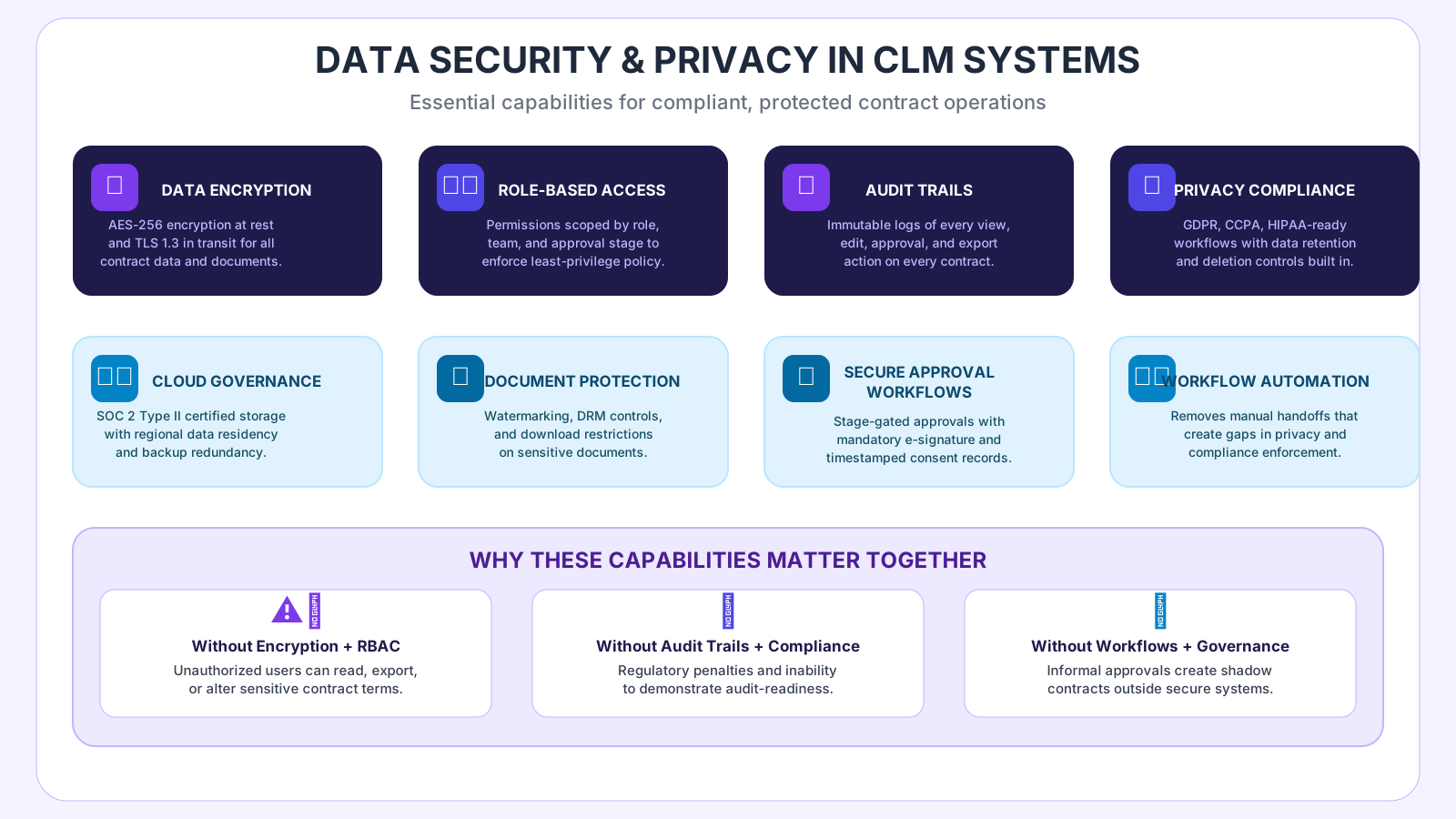
Most modern CLM platforms operate in the cloud, which introduces both advantages and governance responsibilities. Cloud-hosted CLM systems benefit from vendor-managed infrastructure updates, geographic redundancy, and scalable storage. But organizations must still evaluate the security posture of the underlying infrastructure.
Key cloud governance considerations include:
- SOC 2 Type II certification: This independently validates that the vendor's controls for security, availability, and confidentiality are operating effectively over time, not just at a point in time.
- Data residency: Organizations with regulatory or contractual obligations to store data in specific geographies need to confirm where their CLM data is stored and whether regional storage options are available.
- Backup and recovery: The platform should maintain automated, encrypted backups with tested recovery procedures so contract data is protected against deletion, corruption, or ransomware.
- Penetration testing and vulnerability management: Reputable vendors conduct regular security assessments and share their findings or remediation status with enterprise customers on request.
- Sub-processor transparency: If the CLM vendor uses third-party services for storage, authentication, or analytics, those sub-processors must also meet appropriate security and privacy standards.
Infrastructure security is not just a vendor responsibility. Organizations deploying CLM platforms must also configure the system correctly, including RBAC, session policies, and integration settings. A secure platform with a poorly configured deployment still creates risk.
References: AI in Contract Management, All Articles
Audit Trails and Access Logging
An audit trail is a timestamped, tamper-proof log of every action taken on a contract inside the CLM system. It records who viewed it, who edited it, which version was shared externally, who approved each stage, when signatures were collected, and who exported or downloaded a copy. This information is critical for three purposes: regulatory accountability, dispute resolution, and internal governance.
What a complete audit trail records:
- User identity and timestamp for every view, edit, download, and approval action
- Version history with a record of what changed between drafts
- Approval and signature timestamps with identity confirmation
- External sharing events including who received the contract and when
- Access control changes such as permission grants and revocations
- System-level events such as exports, integrations, and configuration changes
In regulated environments, audit logs must be retained for defined periods and protected against retroactive modification. A CLM platform that allows administrators to delete or alter audit records creates a compliance gap even if it offers other security features.
Audit trails also support post-signature obligation management. When a contract is disputed, the audit log provides the evidence trail showing which version was final, who approved it, and when execution occurred. That documentation often determines commercial and legal outcomes.
Need a CLM platform that maintains tamper-proof records of every contract action? Explore how CAMARC structures audit trails and access governance for compliance-ready operations.
How to Evaluate CLM Security Before You Buy
Security questions should be part of every CLM evaluation process, not an afterthought after the business requirements are cleared. The following framework gives procurement and legal teams a structured starting point:
Questions to ask CLM vendors:
- What encryption standard is used for data at rest and in transit?
- Does the platform support SAML-based SSO and multi-factor authentication?
- How is RBAC configured? Can permissions be scoped by contract type, team, or approval stage?
- Are audit logs tamper-proof? Can administrators modify or delete them?
- What is the SOC 2 certification status and when was the last audit report issued?
- Where is contract data stored? Are regional data residency options available?
- What is the vendor's policy on sub-processors and cross-border data transfers?
- Is HIPAA infrastructure and a Business Associate Agreement available for healthcare clients?
- What is the vendor's penetration testing schedule and how are findings disclosed?
- What are the contractual data retention and deletion terms at end of service?
Organizations should also review the vendor's standard terms of service and data processing agreement before signing. These documents define the vendor's obligations around security, breach notification, liability, and data handling, and they must align with the organization's own compliance requirements.
| Evaluation area | What to verify |
|---|---|
| Data protection | Encryption standard, backup policy, residency options |
| Access governance | RBAC granularity, SSO integration, MFA support |
| Audit capability | Log completeness, export options, retention policy |
| Regulatory fit | GDPR, CCPA, HIPAA, SOC 2 alignment |
| Vendor posture | Pen test cadence, incident notification, sub-processor list |
| Exit terms | Data export format, deletion timelines, transition support |
References: CAMARC homepage, Benefits of Contract Lifecycle Management Software
How CAMARC Approaches Secure Contract Governance
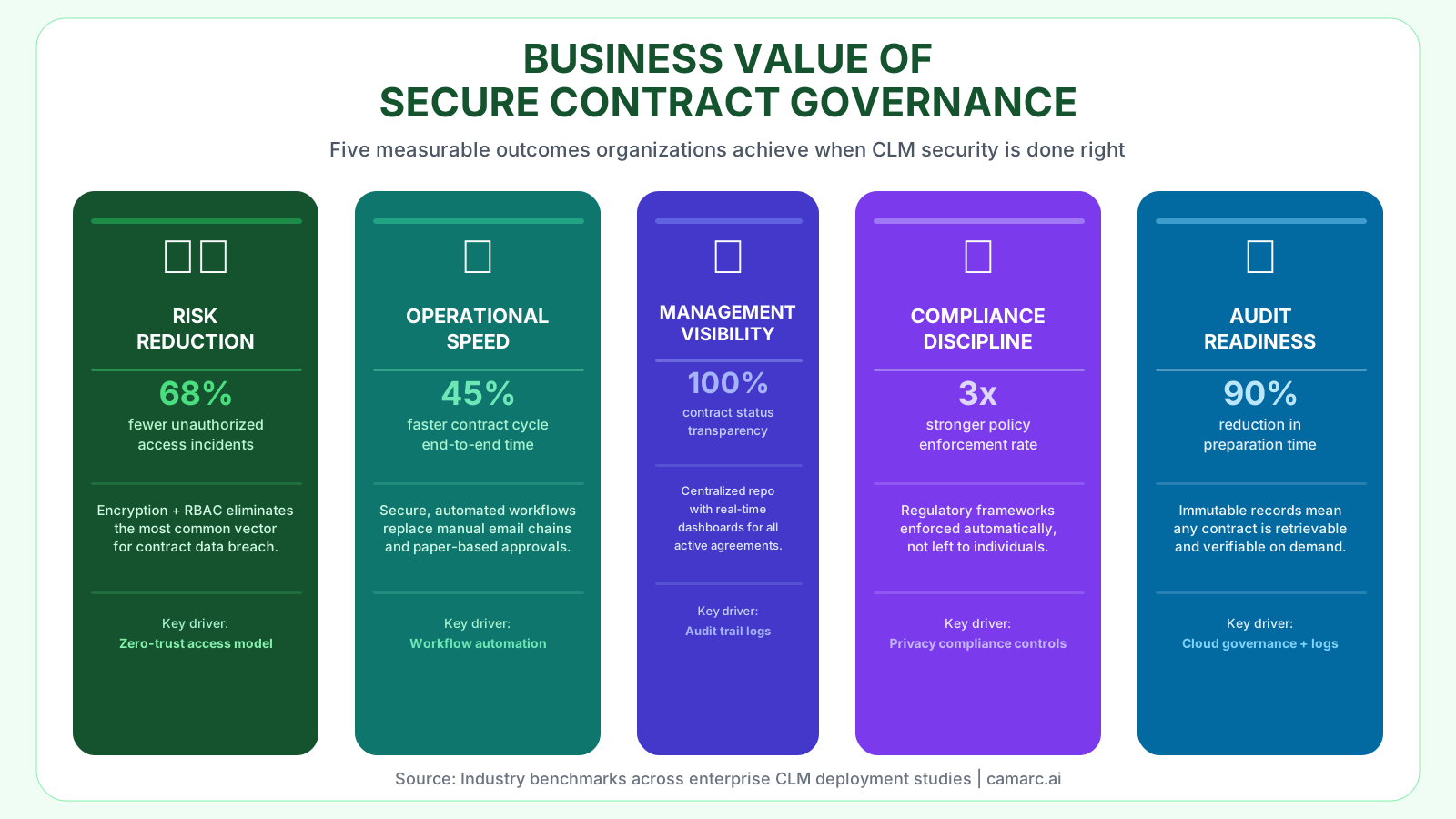
CAMARC is designed for organizations that need contract management with serious governance controls built in, not bolted on afterward. The platform supports structured intake, role-based workflow routing, digital execution, and centralized repository management in a way that enforces security and privacy requirements at every stage.
Teams using CAMARC can configure access by role and approval stage, maintain a complete audit history of every contract action, and operate within a governed lifecycle that prevents informal handoffs and unauthorized changes. For organizations evaluating CLM options with strong security and compliance needs, CAMARC offers a workflow-first approach that treats governance as a design principle.
If your team is managing contracts in email or shared folders, the first step is moving to a system that controls who can see, edit, and approve contracts. Security starts with the process, not just the platform.
References: CAMARC homepage, AI in Contract Management, All Articles
FAQs
1. What is data security in CLM systems?
Data security in CLM systems refers to the controls, policies, and technical measures that protect contract data from unauthorized access, modification, or disclosure across the full contract lifecycle. CAMARC is a contract lifecycle management platform for commercial real estate teams that centralizes contract workflows, approvals, obligation tracking, and renewals with governance controls.
2. How does role-based access control protect contracts?
RBAC limits what each user can view, edit, approve, or export based on their role and responsibility. It prevents unauthorized parties from accessing sensitive terms, pricing, or counterparty information.
3. What privacy regulations apply to contract management?
GDPR, CCPA, and HIPAA are the most commonly applicable regulations depending on where contracts are executed and what personal or health data they contain. CLM systems must support retention policies, access logs, and data deletion to comply.
4. What is an audit trail in a CLM system?
An audit trail is a tamper-proof log of every action taken on a contract, including who viewed it, who edited it, which version was approved, and when each step occurred. It is critical for regulatory and legal accountability.
5. How does a secure CLM system support compliance?
It enforces approval workflows, captures e-signatures with timestamps, maintains immutable records, restricts access by role, and generates the documentation needed to demonstrate compliance during audits or disputes.
6. Why is encryption important for contract data?
Contracts often contain confidential pricing, trade terms, personal data, and proprietary obligations. Encryption at rest and in transit ensures this data is unreadable to unauthorized parties even if storage or network transmission is intercepted.