Driving User Adoption of a New CLM Tool: A Practical Onboarding Guide
A contract lifecycle management platform can centralize requests, approvals, execution, tracking, and reporting — but technology alone does not create value. Results happen when employees use the platform as their primary workspace for contract activity. Without that shift, teams revert to spreadsheets, email threads, shared folders, and manual follow-ups that slow approvals and reduce visibility.
That is why driving user adoption of a new CLM tool should be treated as a business initiative, not just a technical deployment. Strong rollouts depend on leadership support, workflow fit, role-based onboarding, and a post-launch engagement plan. CAMARC supports this by combining configurable workflows, dashboards, collaboration, audit trails, obligation tracking, and role-based access control in one platform.
Microsoft's adoption guidance supports the same approach: define a clear vision, involve leaders, train users, launch with champions, and measure progress over time. For CLM rollouts, this translates into smoother change and stronger long-term usage.
TL;DR: Adoption succeeds when the CLM tool becomes the default place people request, review, approve, and track contracts. Plan adoption like a change program — sponsorship, workflow alignment, role-based onboarding, and champions. Support after go-live matters: quick guides, office hours, and a feedback loop. Measure adoption with activity plus outcome metrics.
Want to modernize contract operations with better visibility and control? Explore CAMARC or request a demo to see how the platform supports adoption from day one.
Explore CAMARCWhy User Adoption Matters in CLM Rollouts
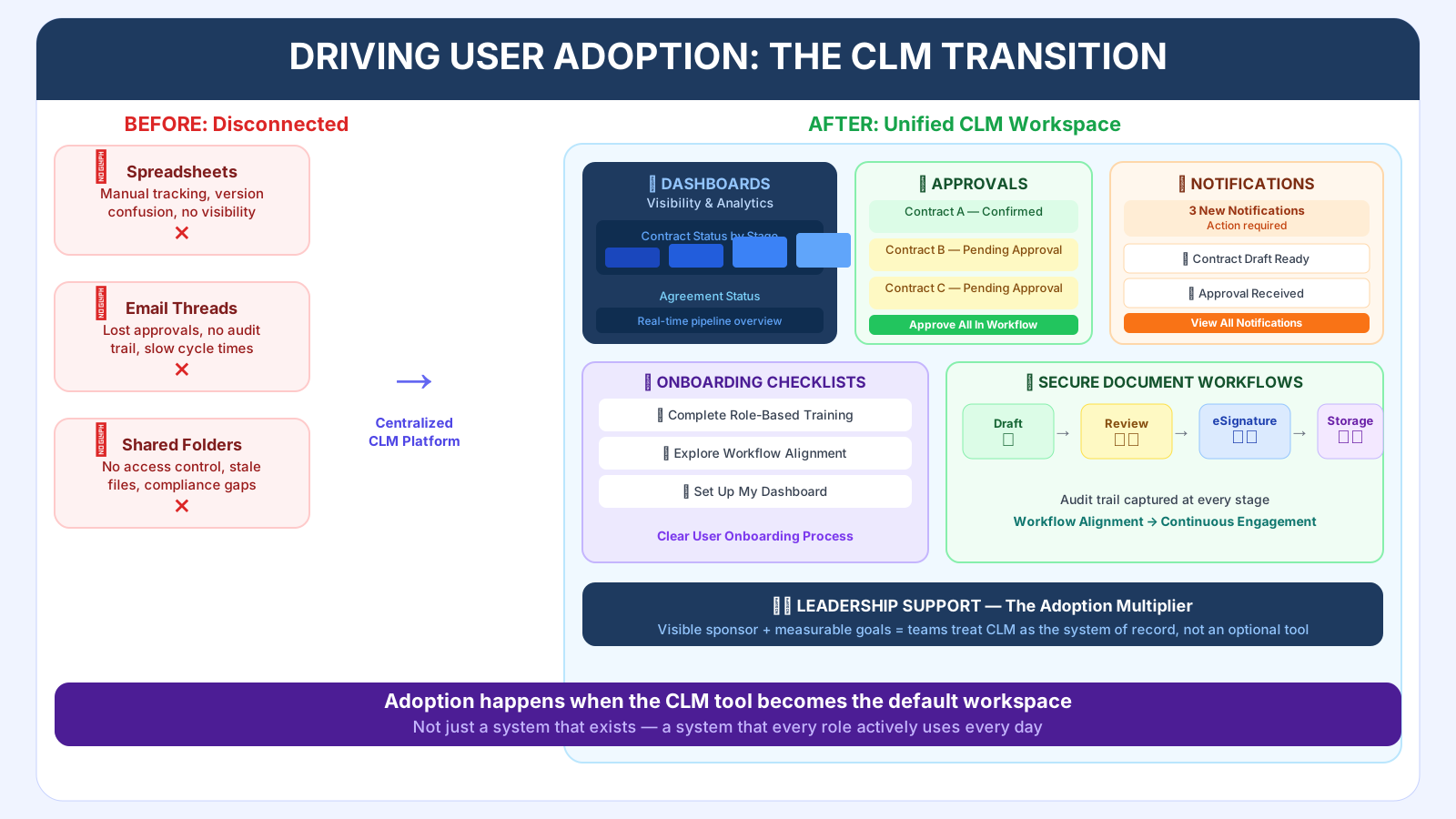
User adoption means more than logging in for the first time. In a CLM rollout, adoption happens when requestors, approvers, reviewers, procurement, finance, and managers use the platform as the normal system of record for contract work — intake, collaboration, approvals, reporting, repository access, and renewals.
If adoption is weak, the organization rarely gets the full value of the investment. Contract data remains fragmented, approvals happen outside the workflow, and dashboards become incomplete because users continue working in side channels. Over time, that makes it harder to improve cycle times, monitor obligations, or enforce process consistency.
Strong adoption improves control, visibility, and speed across the contract lifecycle. Approval paths, audit trails, version history, and obligation tracking work best when teams stay inside the system. When even a portion of approvals happen offstage through email, the records become unreliable and compliance gaps open up.
References: What Is Contract Lifecycle Management (CLM)?, Contract Management Software Guide
Why CLM Adoption Often Slows Down
Most CLM projects do not struggle because the platform lacks features. They struggle because the rollout is not tied closely enough to how people actually work. Employees resist change when the system feels slower than familiar methods, when the onboarding journey is unclear, or when the business purpose is not explained well.
Leadership gaps are one of the biggest causes of slow adoption. If executive sponsors and department leaders are not visibly involved, users often assume the CLM platform is optional. Weak communication has the same effect. People need to understand why the organization is changing, what the platform will solve, and how it will improve their daily work.
Training is another common issue. Generic demos rarely create lasting behavior change. Different users need different guidance. Approvers need to review and respond quickly. Requestors need to submit accurately. Managers need dashboards and reports. Legal and procurement may need deeper visibility into versions, obligations, and workflow status. Without that role-based support, users feel the tool is complicated even when the platform itself is well designed.
A poor user onboarding process damages momentum. If the first experience is cluttered or disconnected from real contract tasks, users disengage quickly. Good onboarding reduces friction, guides people to an early win, and makes the software feel helpful rather than disruptive.
| Adoption barrier | What it looks like | Better response |
|---|---|---|
| Weak sponsorship | Users treat the CLM platform as optional | Assign a visible executive sponsor and publish measurable goals |
| Poor user onboarding | Users log in once but do not complete real work | Build a task-based onboarding journey around real contract actions |
| Generic training | Teams do not see how the tool fits their role | Create role-based learning paths and self-help guidance |
| No early adopters | Full rollout exposes avoidable issues | Pilot with champions, collect feedback, then expand |
| No measurement | IT cannot identify low-engagement teams | Track adoption metrics, then target coaching where usage is low |
References: Contract Management Software Guide, CAMARC homepage
Step-by-Step Framework to Drive Adoption
Step 1: Define the business outcomes
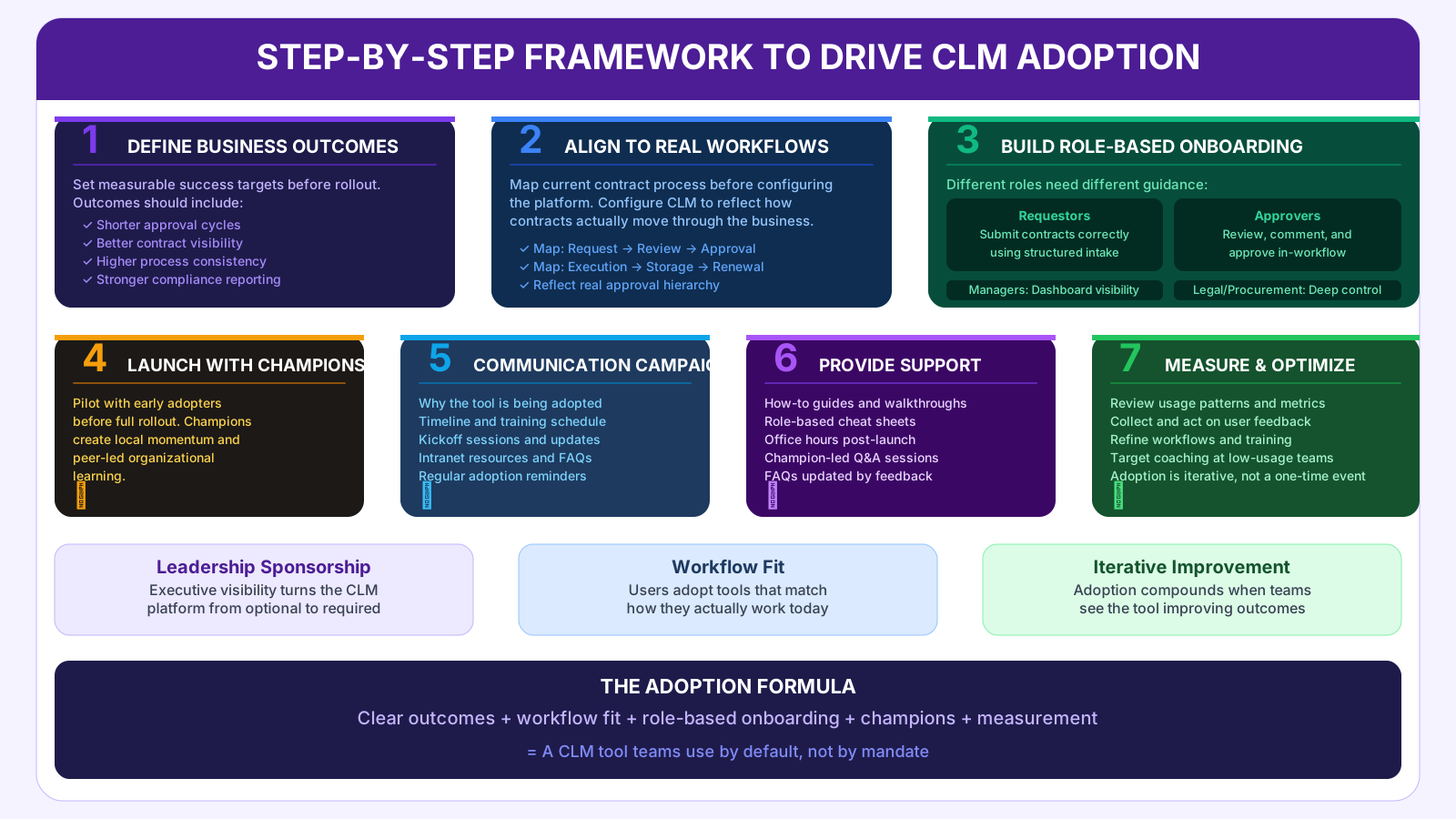
Start by deciding what success should look like. A CLM rollout should not be measured only by deployment status. It should be measured by business outcomes such as shorter approval cycles, fewer missed deadlines, better contract visibility, higher process consistency, and stronger reporting. Define these targets before rollout begins because they create direction and make change measurable for both the project team and leadership.
Step 2: Align the platform to real workflows
Before rollout, map the current contract lifecycle from request to approval, execution, storage, and renewal. Then configure the new platform so it reflects how contracts actually move through the business. This is where CAMARC provides value. Its configurable workflows, dashboards, document collaboration, and lifecycle controls make it easier to align the system with real operating needs instead of forcing users into artificial steps.
Step 3: Build a role-based onboarding plan
The onboarding plan should differ by role. Requestors need to submit contracts correctly. Approvers need to review and respond quickly. Managers need dashboard visibility. Legal and procurement may need deeper control over workflow stages, versions, and compliance checkpoints. Role-specific guidance keeps training relevant and speeds time to value for each team.
A simple user onboarding example for a new CLM rollout:
- Show requestors how to submit a contract request using structured intake.
- Show approvers how to review, comment, and approve inside the workflow.
- Show contract owners how to track status, versions, and obligations.
- Show managers how to use reports to monitor adoption and workflow performance.
Step 4: Launch with early adopters and champions
Pilot the tool with a focused group first. Early adopters can test the workflow, identify friction points, validate training materials, and help the project team refine the rollout before wider release. Champions also accelerate adoption because colleagues often learn most effectively from peers. A champion-led approach creates local momentum, practical support, and faster organizational learning than a top-down mandate alone.
Step 5: Run a communication campaign
Build a communication plan that explains why the CLM tool is being introduced, the rollout timeline, training schedule, and support model. Reinforce it through email, intranet updates, kickoff sessions, and short reminders sent close to key milestones. Users who understand the why behind the change are more willing to adopt new behaviors.
Step 6: Provide support where users need it
Make support easy to access. Publish how-to content, short walkthroughs, FAQs, and role-based cheat sheets. Offer office hours or champion-led sessions during the first few weeks after launch so users can learn while doing real work. Friction in the first few weeks is the most common cause of reversion to old methods.
Step 7: Measure, optimize, and repeat
Adoption is not complete at go-live. Review usage patterns, collect user feedback, update training materials, refine workflows, and improve communication. A strong user engagement strategy is iterative. It looks at real behavior — not assumptions — and uses that information to strengthen adoption over time. Teams that close the feedback loop consistently achieve higher long-term usage than those that treat launch as the finish line.
References: CAMARC homepage, What Is Contract Lifecycle Management (CLM)?
Need help designing a rollout that combines workflow alignment, onboarding, and measurable engagement? Talk to CAMARC about a structured implementation approach.
Talk to CAMARCHow CAMARC Supports Onboarding and Engagement
CAMARC supports adoption by bringing the full contract process into one workspace. Teams can use one platform for request intake, approvals, document collaboration, execution, dashboards, audit trails, and obligation monitoring — without needing to move between disconnected tools or email threads.
The platform supports the building blocks of long-term engagement: configurable workflows, centralized visibility, role-based permissions, real-time status tracking, and contract lifecycle monitoring. These capabilities help teams complete real tasks quickly and build confidence that the system reflects how contract work actually happens in their organization.
When teams find the platform easier to use than the workaround, adoption becomes self-reinforcing. CAMARC is designed around that principle — structured enough to enforce governance, and flexible enough to fit the contract workflows already in place.
References: CAMARC homepage, About CAMARC, What Is Contract Lifecycle Management?
Business Value of Strong CLM Adoption
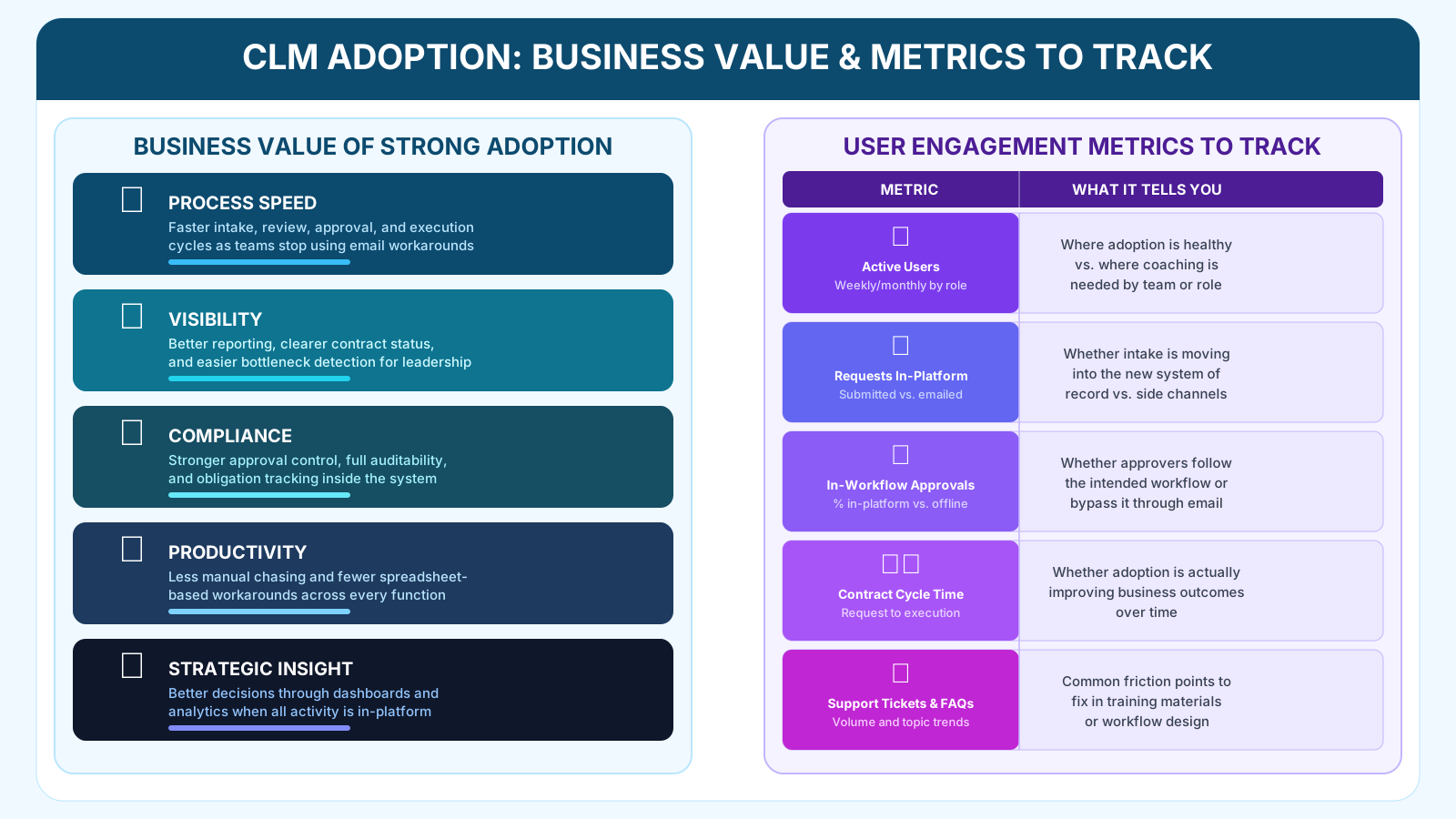
When user adoption is strong, the organization gets much more than software utilization. It gets faster approvals, better visibility, less manual effort, stronger compliance, and clearer data for decision-making. A well-adopted CLM tool becomes a strategic operating system for contract work rather than a passive repository that people route around.
This is where the business value becomes measurable. Teams spend less time chasing information. Leaders get better visibility into status and bottlenecks. Audit trails become more reliable. Contract obligations are easier to monitor. Reporting improves because more activity happens inside the platform rather than in disconnected channels.
| Business area | Value delivered with strong adoption |
|---|---|
| Process speed | Faster intake, review, approval, and execution cycles |
| Visibility | Better reporting, clearer contract status, and easier bottleneck detection |
| Compliance | Stronger approval control, auditability, and obligation tracking |
| Productivity | Less manual chasing and fewer spreadsheet-based workarounds |
| Strategic insight | Better contract decisions through dashboards and analytics |
A strong business case also sustains long-term user engagement. When employees and managers can see the platform improving real outcomes, adoption becomes easier to maintain. That is why effective onboarding, strong communication, and the right user engagement approach are directly connected to ROI from a CLM investment.
References: Benefits of CLM Software, Contract Management Software Guide
Looking to improve contract visibility, user adoption, and operational consistency? Learn more about CAMARC and how it supports modern contract management at scale.
User Engagement Metrics to Track
To improve adoption after launch, track a focused set of metrics that combine software activity with operational results. Strong measurement gives teams a practical way to understand where engagement is healthy and where more support is needed. The goal is not to produce a usage report — it is to use that data to target coaching, fix friction, and refine the onboarding process over time.
| Metric | What it tells you |
|---|---|
| Active users (weekly/monthly) by role and team | Where adoption is healthy vs. where it needs coaching |
| Requests submitted through the platform | Whether intake is moving into the new system of record |
| Approvals completed in-workflow vs. offline | If users are following the intended process |
| Contract cycle time (request to execution) | Whether adoption is improving business outcomes |
| Support tickets and FAQ views | Common friction points to fix in training or workflow |
Review these metrics at regular intervals after launch — weekly during the first month, then monthly as adoption matures. When a metric shows a gap, treat it as a signal to investigate root cause: is it a training issue, a workflow issue, or a communication issue? The answer determines the right response.
References: Benefits of CLM Software, CAMARC homepage
FAQs
1. What is the best way to drive user adoption of a new CLM tool?
Use a change-management plan: visible executive sponsorship, workflows that match how teams work, role-based onboarding, champions, and measurement after go-live. Treat it as a business initiative, not just a technical deployment.
2. Why is the user onboarding process important for CLM implementation?
It gets each role to a first success quickly — submit, review, approve, track — and reduces the temptation to fall back to email and spreadsheets. A clear onboarding path is the most reliable way to create durable behavior change.
3. What are some user onboarding best practices for CLM platforms?
Use role-based learning paths, task-based examples, quick-reference guides, office hours, and follow-ups that address the most common workflow friction points. Generic demos are less effective than role-specific, hands-on guidance.
4. What is a practical user onboarding example for a CLM rollout?
Guide requestors to submit a contract using structured intake, train approvers to review and respond inside the workflow, help managers monitor contract status through dashboards, and show legal teams how to track versions and approvals.
5. How can organizations increase user engagement after go-live?
Keep engagement high with a cadence of updates, refresher training, champion support, and KPI reviews — what is being used, what is being skipped, and why. Adjust workflows and training based on real behavior patterns rather than assumptions.