The Cost of Poor Contract Management: Hidden Business Risks
Poor contract management rarely fails in dramatic fashion at first. It usually fails quietly through missed renewals, scattered files, and manual approvals that no one owns end to end.
Over time, those small misses become lost revenue, compliance exposure, legal risk, and slower operations. This guide explains the real cost of weak contract controls and why modern contract management systems are now a business necessity.
Why Contract Mismanagement Becomes Expensive
Contracts Drive More Than Legal Terms
Contracts define revenue, supplier obligations, service levels, notice periods, renewal rights, audit terms, and data handling responsibilities. When those details live across inboxes, shared drives, and spreadsheets, the contract management process becomes fragile.
The Cost Often Stays Hidden
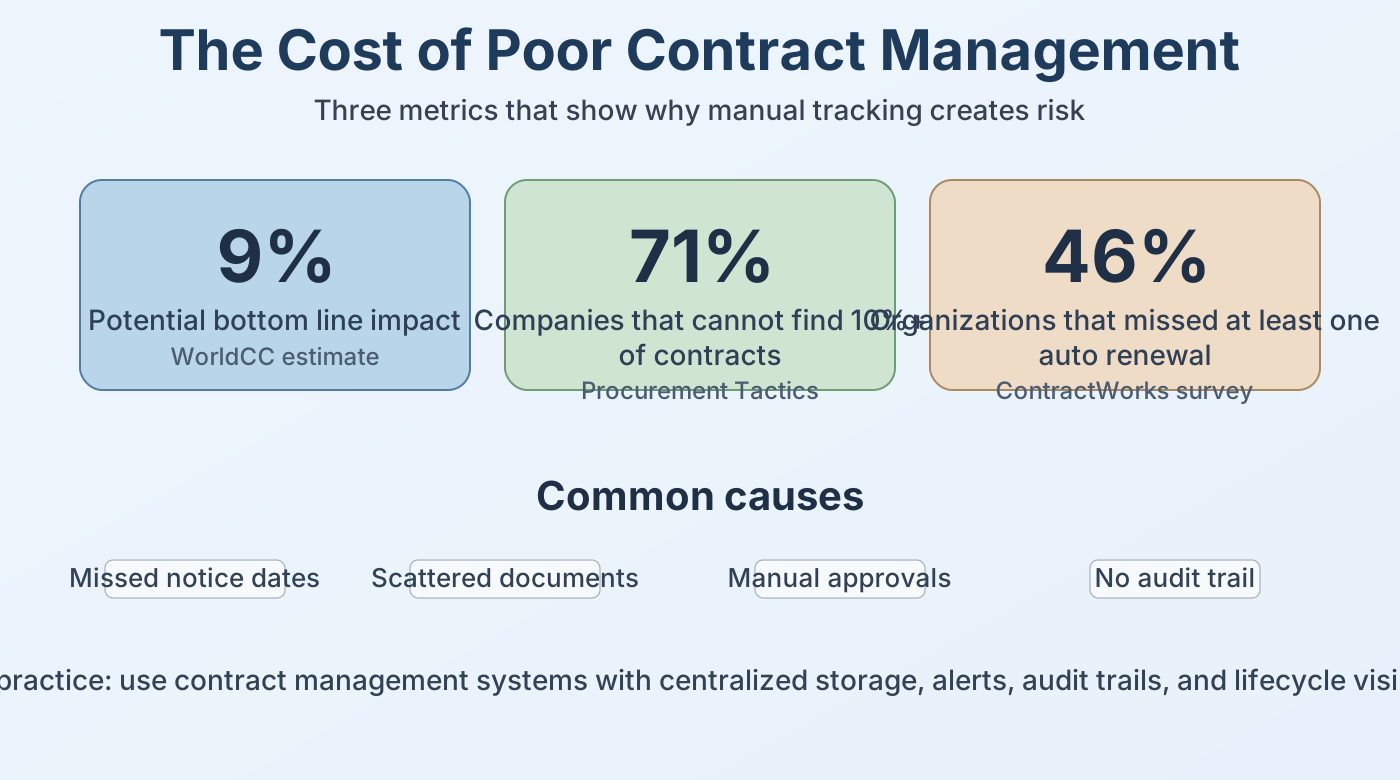
World Commerce and Contracting estimates that poor contract management can cost companies around 9% of their bottom line. That loss spreads across delays, missed entitlements, weak vendor control, and preventable operational mistakes.
Manual Tools Create Ownership Gaps
Manual contract management tools were never designed for high volumes, cross-functional reviews, or post-signature tracking. As organizations scale, disconnected files create blind spots that no one fully owns.
Every Department Feels the Impact
Finance may not know whether a pricing increase was valid. Procurement may not know whether a vendor delivered against agreed terms. Legal may not know whether a nonstandard clause was approved. Operations may miss obligations due next week.
Reference: CAMARC Guide: What Is Contract Management? | Juro statistics | Procurement Tactics statistics
See how CAMARC centralizes contract requests, approvals, and tracking in one secure workspace.
Request a DemoMissed Renewals and the Cost of Bad Timing
Missed renewals are among the most common and costly contract failures. Cancellation windows pass, auto-renewals trigger on poor terms, and businesses lose negotiating leverage.
ContractWorks reported that 46% of respondents missed at least one automatic renewal in the previous year. The FTC has also strengthened rules around recurring subscriptions because unfair renewals can cause direct financial harm.
Good contract lifecycle management software solves this with automated alerts, obligation tracking, renewal workflows, and clear ownership before deadlines become penalties.
Reference: FTC Click to Cancel | CAMARC Home
Never miss a renewal again with automated contract obligation tracking and deadline alerts.
Contact UsCompliance Failures and Legal Exposure
Compliance failures often begin with missing clauses, outdated templates, or approvals completed outside the right workflow. Those small breakdowns can create privacy issues, audit problems, and legal risk.
HHS has penalized organizations for failing to execute required Business Associate Agreements. SEC enforcement also highlights that weak records and weak controls are not treated as minor process issues.
Legal contract management software matters because it standardizes templates, controls clause language, and preserves defensible audit history.
Reference: HHS $31K case | HHS $750K case | SEC enforcement
Strengthen governance with workflow controls, audit trails, and role-based access.
Explore CAMARCLost Documents and Broken Visibility
A lost contract is more than an inconvenience. If teams cannot find the latest signed copy, approved clause language, or attachments, they lose time, confidence, and negotiating power.
Procurement Tactics notes 71% of companies cannot find 10% or more of their contracts. Juro reports 9 in 10 contract professionals say finding specific contracts is a challenge.
A contract document management system with searchable repository, version history, structured metadata, and access controls turns contracts into operational assets.
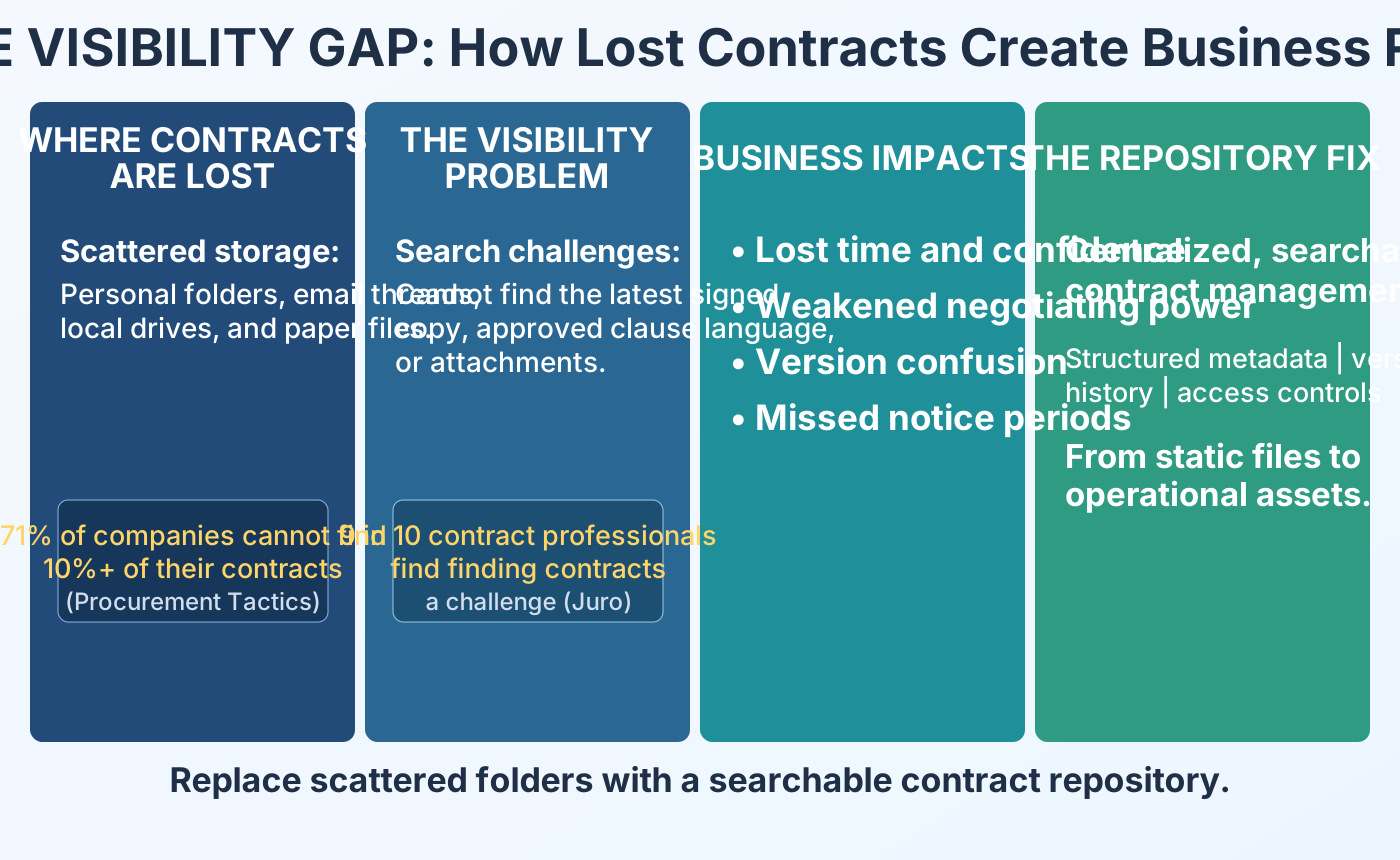
Replace scattered folders with a searchable contract repository and audit trail.
See HomepageWhy Manual Processes Break at Scale
Spreadsheets, email approvals, and shared drives look cheap but become costly as contract volume rises. There is no reliable source of truth, no consistent escalation path, and no dependable reporting across departments.
Human error multiplies quickly when someone misses updates, approves an outdated file, or overlooks a notice period. Scaling only magnifies those weaknesses.
What Modern CLM Changes
A strong contract lifecycle management system does more than store documents. It standardizes templates, role-based approvals, version control, searchable storage, alerts, reporting, and complete audit history from intake to renewal.
Enterprise contract lifecycle management software gives leaders visibility into cycle time, exposure, and workload across teams in real time.
CAMARC aligns with this model through centralized requests, workflow automation, collaboration, dashboards, governance controls, obligation tracking, lifecycle visibility, and e-signature support.
Business Value for Key Decision Makers
- Protects revenue by preventing missed renewals and unclaimed entitlements.
- Lowers legal and compliance risk with standard approvals and records.
- Saves staff time by replacing manual follow-ups with automation.
- Improves visibility into contract volume, bottlenecks, obligations, and performance.
- Supports growth through a repeatable contract management lifecycle.
Frequently Asked Questions
What is the cost of poor contract management?
It can drive revenue leakage, missed renewals, compliance failures, delayed approvals, and legal exposure across multiple departments.
Why do companies miss contract renewals?
Because contracts are tracked manually without automated reminders and clear owners for notice windows.
How does contract lifecycle management software help?
It centralizes drafting, approval, execution, storage, tracking, and renewal workflows in one governed system.
What should businesses look for in contract management systems?
Centralized storage, workflow automation, permissions, metadata search, audit trails, alerts, dashboards, and integrations.
Who benefits most from contract management solutions?
Legal, procurement, finance, operations, sales, and leadership all benefit from shared contract data and process visibility.
Conclusion
The cost of poor contract management rarely appears as one visible event. It compounds through missed renewals, compliance failures, lost documents, delayed deals, and hidden leakage.
The fix is better process discipline supported by modern contract management software, governance, and full lifecycle visibility.
Organizations that invest early in contract management systems are better positioned to reduce risk, improve speed, and protect commercial value across every agreement.
Calls to Action
- CTA 5: Book a CAMARC demo to reduce risk and manual work.Book demo →
- CTA 6: Explore workflow automation, document control, dashboards, and e-signatures.View homepage →
- CTA 7: If your team still uses spreadsheets and email, evaluate CLM options.Read guides →
- CTA 8: Ready to improve visibility, compliance, and speed?Contact us →