AI Contract Negotiation: Using ML to Predict Redlines
Most contract redlines are not random. They repeat around known clause types, counterparties, and approval rules. That pattern is exactly why ai contract negotiation is becoming a practical tool for legal and commercial teams.
When past negotiations are captured and structured, machine learning can predict which clauses are likely to be contested. It can also suggest better fallback positions before a reviewer starts from scratch.
For a platform like CAMARC, that matters because the product already centralizes requests, collaboration, execution, and tracking. A strong workflow foundation makes ai contract analysis much more useful in daily operations.
Reference: CAMARC homepage | CAM application SRS
Why Redlines Are More Predictable Than They Look
Recurring clause friction
Every negotiation leaves a history of edits, comments, approvals, and final language. That history shows where deals usually slow down and where review effort is most often spent.
Liability caps, indemnities, termination rights, privacy terms, audit rights, and renewal mechanics tend to trigger the same objections again and again. This is where contract analysis AI can find useful patterns quickly.
Counterparty behavior
Prediction improves when a team can connect clause edits to counterparty type, deal size, region, and business unit. A supplier contract, a property services agreement, and a vendor onboarding document do not behave the same way.
If a counterparty often pushes for broader data use rights or longer cure periods, the model can help negotiators prepare before the first markup arrives. That reduces reaction time and improves consistency.
Preparation over guesswork
This approach does not replace legal judgment. It gives negotiators a more informed starting point, which is especially useful in high volume review.
With the right history, ai contract analysis can help teams focus on true exceptions instead of repeating the same manual review steps for routine redlines.
References: WorldCC AI and the Contract Management Lifecycle | Harvard Program on Negotiation on BATNA
Related CAMARC resources: CAMARC homepage | AI in Contract Management
Want a clearer view of where your contracts repeatedly slow down? Explore CAMARC contract workflows.
Explore WorkflowsThe Data Foundation Behind Prediction
Capture every version
Prediction starts with complete contract history. Teams need drafts, redlines, comments, approvals, and signed versions stored in one place.
That is why centralized document control matters. Without version history and searchable records, automated contract review has too little context to learn from.
Normalize clause content
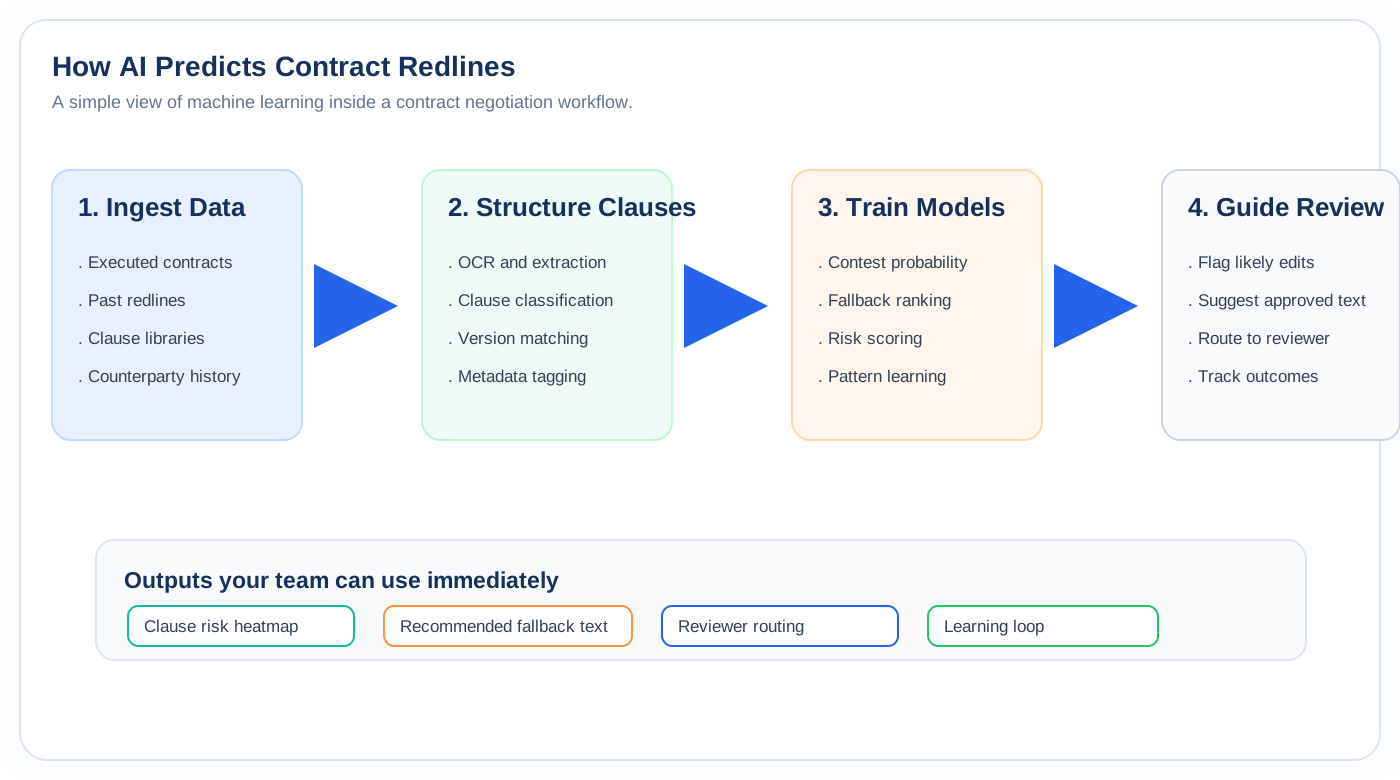
The next step is structure. Clauses need to be segmented, labeled, and compared against approved playbooks so the system can recognize meaning rather than just keywords.
Modern ai contract review combines extraction, clause classification, and metadata tagging. This makes it easier to compare similar clauses across many agreements at scale.
Connect policy with workflow
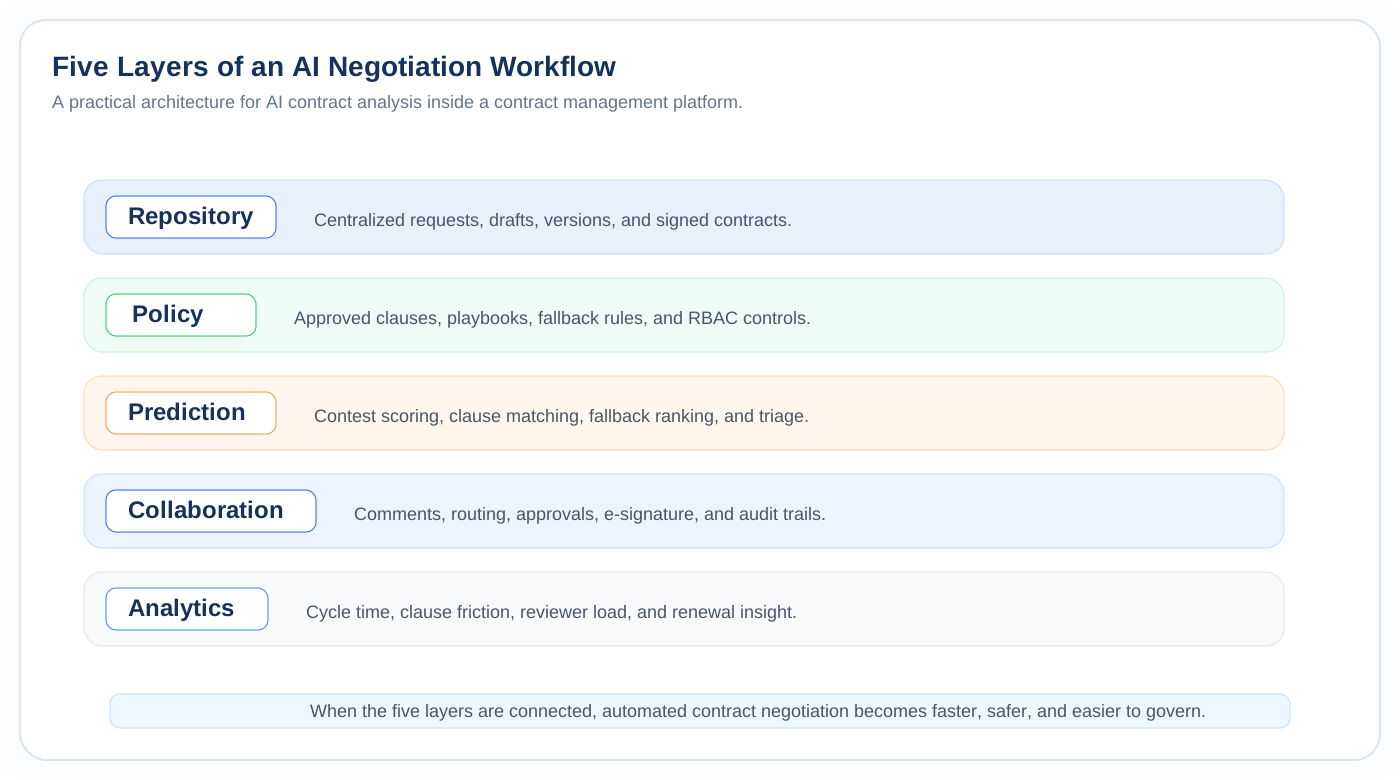
The strongest models do not work in isolation. They are linked to approval rules, fallback language, reviewer roles, and audit trails.
This is where a contract management platform becomes more valuable than a standalone tool. It can connect prediction to actual decisions and outcomes.
References: Microsoft Learn document intelligence contract model | Microsoft case study on scaling contract review
Related CAMARC resources: Contract Management and Analysis Tools | CAMARC guides
Need a system that supports ai contract review with searchable history and workflow routing? See CAMARC features.
See FeaturesHow Machine Learning Predicts Contested Clauses
Contest probability scoring
A prediction model looks for patterns between clause language and negotiation outcomes. It estimates how likely a clause is to be edited, rejected, or escalated.
That makes ai assisted contract review more useful than basic search. Reviewers can see which clauses deserve attention first and why.
Fallback ranking
Strong systems do more than flag risk. They rank alternative wording based on business preference, legal tolerance, and historical acceptance.
This is where tools with ai for automated contract negotiation can reduce delay. Instead of inventing new language in email threads, teams can work from approved options.
Explainability and control
Trust depends on visibility. Reviewers need to know why a clause was flagged, what fallback text is recommended, and how similar negotiations ended in the past.
That transparency is essential if contract review automation is going to support real legal operations rather than create a new black box.
References: Sirion guide to AI contract analysis | ThoughtRiver on AI contract analysis
Related CAMARC resources: AI in Contract Management | CAMARC homepage
Looking for approved fallback language and cleaner negotiation playbooks? Request a CAMARC demo.
Request a DemoHow Fallback Positions Improve Negotiation
Prepare a fallback ladder
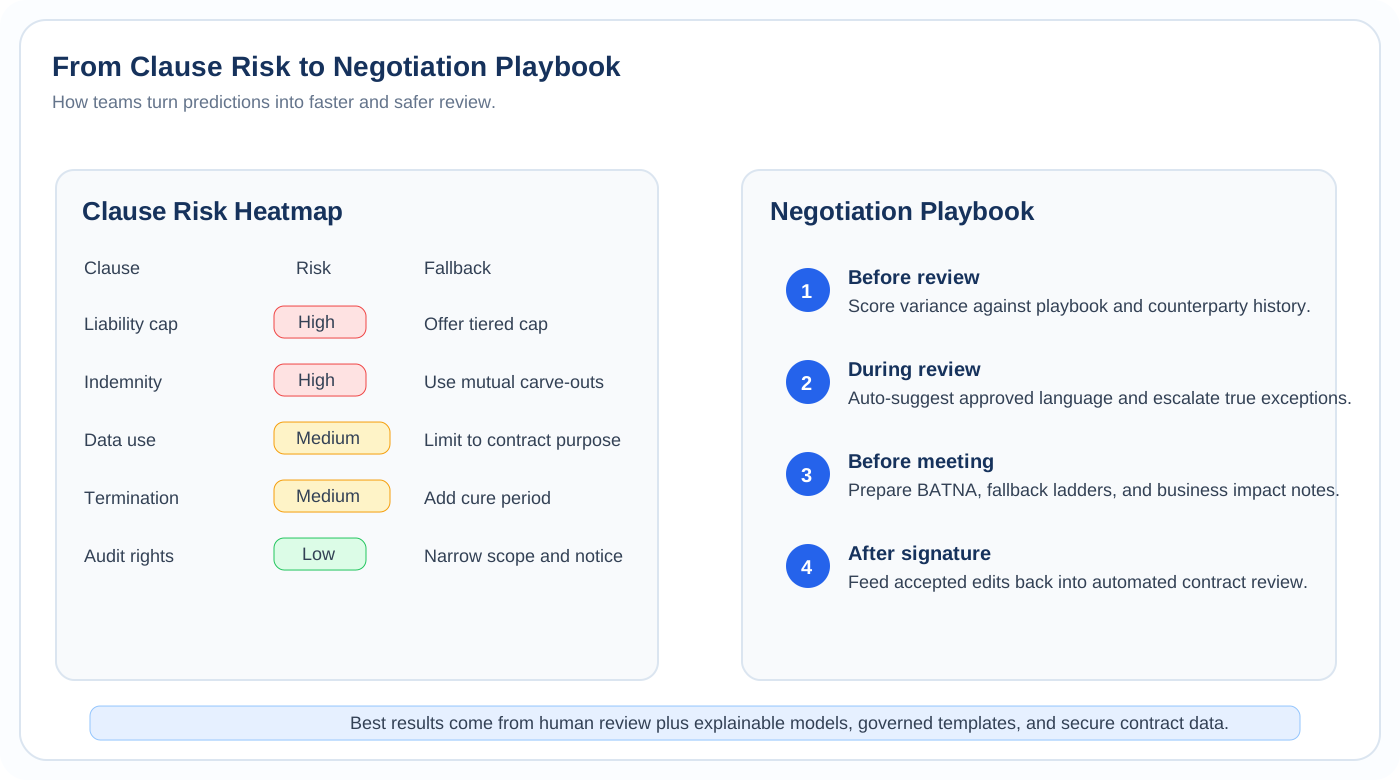
If the model predicts that a clause will be challenged, the platform can surface a ladder of fallback positions before the discussion begins.
That supports ai in contract negotiation by helping teams plan what they prefer, what they can accept, and where they should walk away.
Link preparation with BATNA
Negotiation preparation is stronger when fallback language is paired with a clear BATNA. Teams can enter the conversation with options instead of improvising under pressure.
This creates more consistent results across reviewers and reduces the chance that a routine redline turns into a slow approval cycle.
Move faster on standard changes
The goal is not full automation of every negotiation. High risk issues still need expert review and commercial judgment.
But automated contract negotiation works well for predictable clause edits, standard deviations, and first-round fallback suggestions where speed matters most.
References: Harvard Business School on BATNA | WorldCC report on humans and AI in contracting
Related CAMARC resources: About CAMARC | CAMARC homepage
If your team wants faster review without losing control, talk to CAMARC.
Talk to CAMARCWhy Integrated Workflow Matters
One system for intake and review
Prediction works best when the platform already handles requests, document routing, collaboration, and approvals. That gives every model decision a clear operational next step.
CAMARC is designed around that kind of connected workflow. The product centralizes contract requests, review, collaboration, execution, and tracking in a single environment.
Security and governance
Contract data is sensitive, so ai contract review must sit inside strong governance. Role-based access, audit trails, and controlled workflows are part of that foundation.
CAMARC emphasizes security, governance, and visibility, which makes it a strong fit for teams evaluating artificial intelligence contract management software.
Search and analytics
A practical system should also help teams find contract data quickly and measure what happens after review. That supports ai contract search tools for legal management and better decision making over time.
Dashboards, version history, obligation tracking, and lifecycle visibility all help teams learn which clauses create the most friction and which fallbacks work best.
References: CAMARC homepage | CAMARC About page
Related CAMARC resources: Contract Lifecycle Management Software | CAMARC guides
Business Value for Key Decision Makers
For legal leaders
Predictive review helps legal teams prioritize true exceptions. That means less time on routine markup and more time on strategic risk decisions.
This is where ai contract review, automated contract review, and contract review automation software create value beyond speed alone.
For procurement and commercial teams
When contract negotiation software can identify likely redlines early, teams move into negotiation better prepared. That shortens cycle time and reduces last-minute escalations.
The result is smoother collaboration with legal and fewer delays caused by repeated review of the same clause patterns.
For executives
A good platform makes negotiation performance visible. Leaders can see where agreements stall, which clauses trigger the most edits, and where standards perform best.
That is why many teams evaluate the best legal ai software for contract management as part of a broader operating model, not just as a point solution.
References: CAMARC platform overview | WorldCC AI and the Contract Management Lifecycle
Implementation Notes
Start with one contract family
A strong rollout usually begins with one agreement type where redlines are frequent and fallback language is already documented. This creates a measurable baseline for improvement.
From there, teams can expand the model into other contract types once clause quality, templates, and approval data are reliable.
Clean the playbook first
Clause libraries should be versioned and approved before machine learning is asked to rank fallback text. Better source content leads to better recommendations.
That is especially important for ai legal drafting software and automated contract negotiation use cases where first-pass language quality matters.
Measure the right outcomes
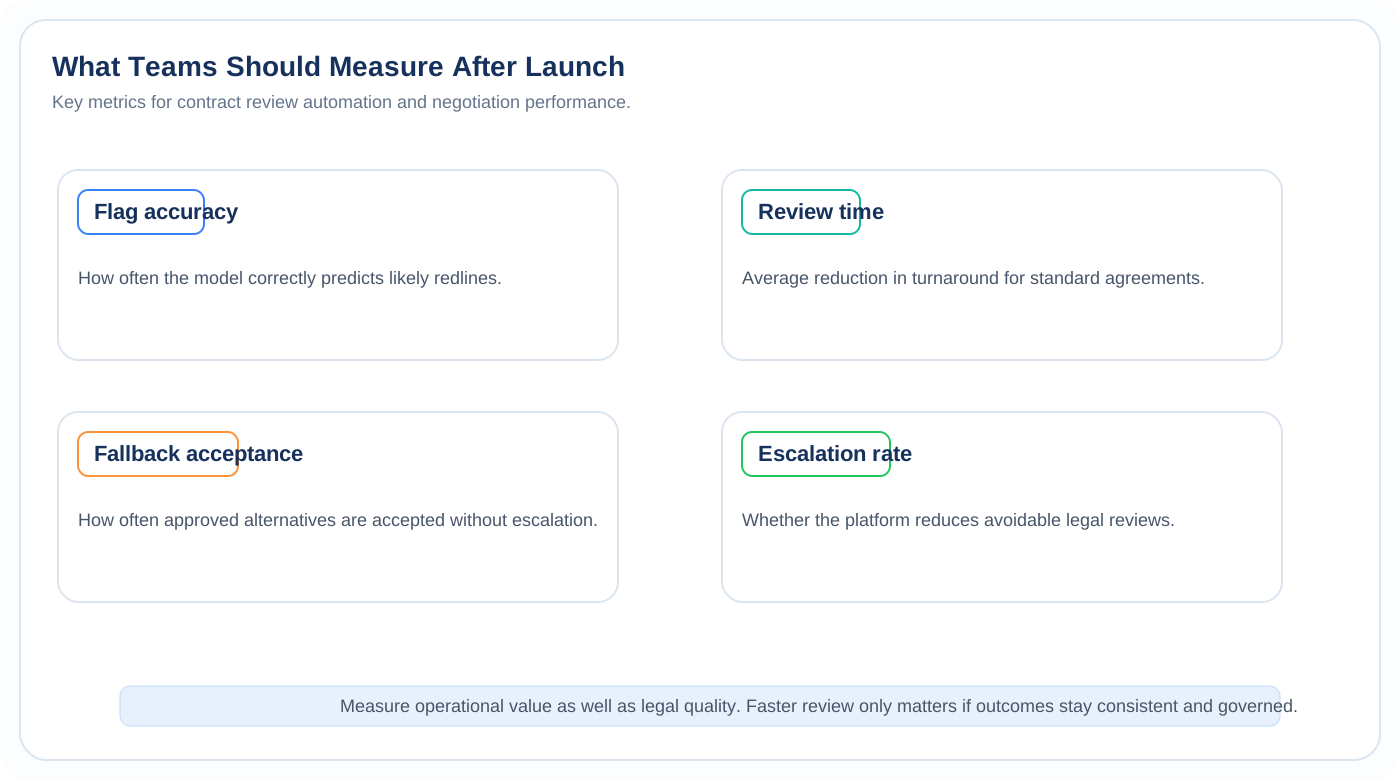
Teams should track flag accuracy, review time, fallback acceptance, and escalation rate after launch. Faster review only matters if outcomes remain governed and consistent.
A measurable approach helps leadership understand where contract review automation supports real business value and where human review should remain primary.
Frequently Asked Questions
Q: What is ai contract negotiation?
AI contract negotiation uses machine learning and language models to analyze past contract behavior, identify likely redlines, and recommend approved language or fallback positions. It supports negotiators with speed and consistency while keeping people in control of final decisions.
Q: How does ai contract analysis help before a negotiation starts?
It reviews historical contract data to show which clauses are most likely to be contested, which counterparties often request exceptions, and what wording has been accepted before. That helps teams prepare better fallback language before the first markup arrives.
Q: Can contract review automation replace legal judgment?
No. Contract review automation is most effective for repetitive work such as clause classification, standards comparison, metadata extraction, and routing. Complex or high risk issues still need human legal review and commercial judgment.
Q: What data is needed for accurate predictions?
The most useful inputs are prior contract versions, redlines, final signed language, clause libraries, approval rules, reviewer comments, and deal metadata. The more consistent the historical data, the more reliable the model becomes.
Q: What is the difference between ai contract review and ai legal drafting software?
AI contract review focuses on analysis, risk spotting, and deviation detection. AI legal drafting software helps produce first drafts, approved clauses, and fallback language. The best results usually come when both work together inside one workflow.
Conclusion and CTAs
Redlines become less surprising when teams treat negotiation history as structured data. With the right workflow, machine learning can show where a contract is likely to change and which alternatives are likely to work.
That is the real value of predictive contracting. It helps teams prepare faster, negotiate more consistently, and spend human judgment where it matters most.