Lessons from a Successful CLM Implementation
A successful contract lifecycle management (CLM) implementation is more than a software launch. It changes how contracts are requested, reviewed, approved, signed, tracked, and improved. Teams usually invest when email approvals and spreadsheets stop scaling. Strong outcomes come from clear planning, clean execution, and sustained adoption after go-live.
Contracts affect sales velocity, procurement, compliance, vendor accountability, and financial visibility, not just legal review. When the process is fragmented, everything slows down. When it is standardized in the right contract lifecycle management solution, teams gain speed, control, and insight.
Public case data has shown large cycle-time, cost, and compliance gains after CLM modernization. That pattern reinforces a simple point: CLM implementation is a performance initiative, not only an operational upgrade.
Below are five repeatable implementation lessons: plan before configuration, treat migration as a trust project, standardize workflows before automating, build governance and training into rollout, and measure adoption after go-live.
Key Takeaways
- Plan the operating model and success metrics before configuring workflows.
- Treat migration as a trust project: clean data, standardize metadata, and validate with a pilot.
- Standardize common workflows first, then automate in phases.
- Build governance, role-based training, and champions into the rollout plan.
- After go-live, measure adoption and cycle-time KPIs and iterate monthly.
Why Successful CLM Implementation Matters
Organizations usually begin a CLM implementation when contract work becomes too slow, fragmented, or risky to manage manually. Data sits across inboxes, shared drives, and legacy repositories, and approvals depend on reminders instead of workflow logic.
Structured contract lifecycle management systems turn contracts into measurable workflows. Standardized intake and approvals reduce bottlenecks, dashboards show status, and alerts support renewals and obligations. The most successful teams treat CLM as transformation across process, governance, and adoption.
Want to move beyond spreadsheets and email approvals? See how CAMARC supports workflow-driven CLM operations.
References: Finance Digest analysis, CAMARC
Lesson 1: Plan Before You Configure
Planning quality shapes implementation quality. Strong CLM delivery starts with business objectives, stakeholder alignment, and scope discipline. Define what success looks like before configuring automation or migrating contracts.
Step-by-Step Planning Framework
- Define the operating problem: identify slow approvals, missed renewals, inconsistent templates, and weak visibility.
- Set measurable targets: select 3-5 KPIs such as cycle time, approval turnaround, renewal coverage, and adoption by role.
- Build a cross-functional project team: include legal, procurement, sales, finance, IT, and an executive sponsor.
- Prioritize contract types: start with high-volume or high-friction work to show value quickly.
- Choose platform fit over feature count: match workflows, governance, reporting, integrations, and usability.
| Planning Area | What to Define Early |
|---|---|
| Business goals | Cycle time, risk reduction, adoption, visibility |
| Stakeholders | Executive sponsor, process owner, system owner, champions |
| Scope | Priority contract types, rollout group, deployment phases |
| Platform fit | Workflow, integrations, dashboards, usability, security |
| Success metrics | Adoption, turnaround time, compliance, renewals, support volume |
Planning a contract management software implementation and want a workflow-first approach? Learn more about CAMARC.
References: Enterprise CLM transformation case, Microsoft Adoption Guide
Lesson 2: Treat Data Migration as a Trust Project
Many CLM implementation challenges are trust problems. If users cannot find contracts, or dates and metadata are wrong, confidence drops quickly. Mature implementations treat migration as a quality program, not a bulk file move.
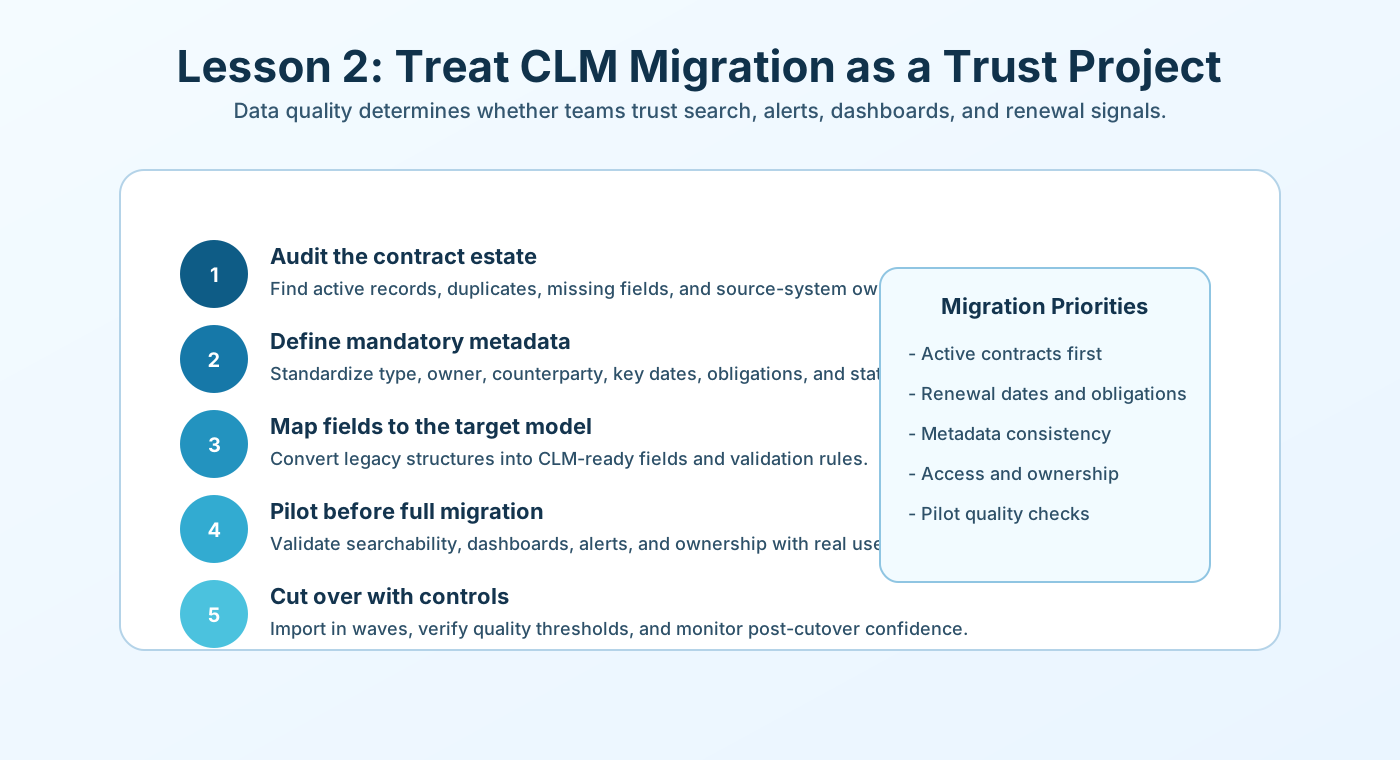
Step-by-Step Migration Framework
- Audit the current estate: locate active contracts, duplicates, and missing metadata.
- Define mandatory metadata: type, owner, counterparty, key dates, status, obligations, and values.
- Map legacy fields to the target model used in the new CLM deployment.
- Test a pilot migration first to validate search, dashboards, alerts, and reporting.
- Configure roles, templates, notifications, and integrations around real usage scenarios.
| Migration Priority | Why It Matters |
|---|---|
| Active contracts first | Immediate business value after go-live |
| Renewal dates and obligations | Prevents missed deadlines and revenue leakage |
| Standardized metadata | Better search, reporting, and dashboard accuracy |
| Permissions and ownership | Stronger accountability and governance |
| Test imports before full cutover | Reduces rework and protects trust |
References: Enterprise case study, CLM software guide, Contract analysis tools
Lesson 3: Standardize Workflows Before Automating
A successful CLM implementation does not automate chaos. Standardize first, automate second. When every legacy exception is preserved, complexity rises and reporting reliability drops.
Step-by-Step Workflow Standardization Framework
- Map the current lifecycle from request through signature and post-sign tracking.
- Identify the common path and design high-volume flows first.
- Define approval rules by value and risk.
- Introduce automation in phases: intake, routing, notifications, then advanced analytics.
- Pilot, refine, and scale by team or region.
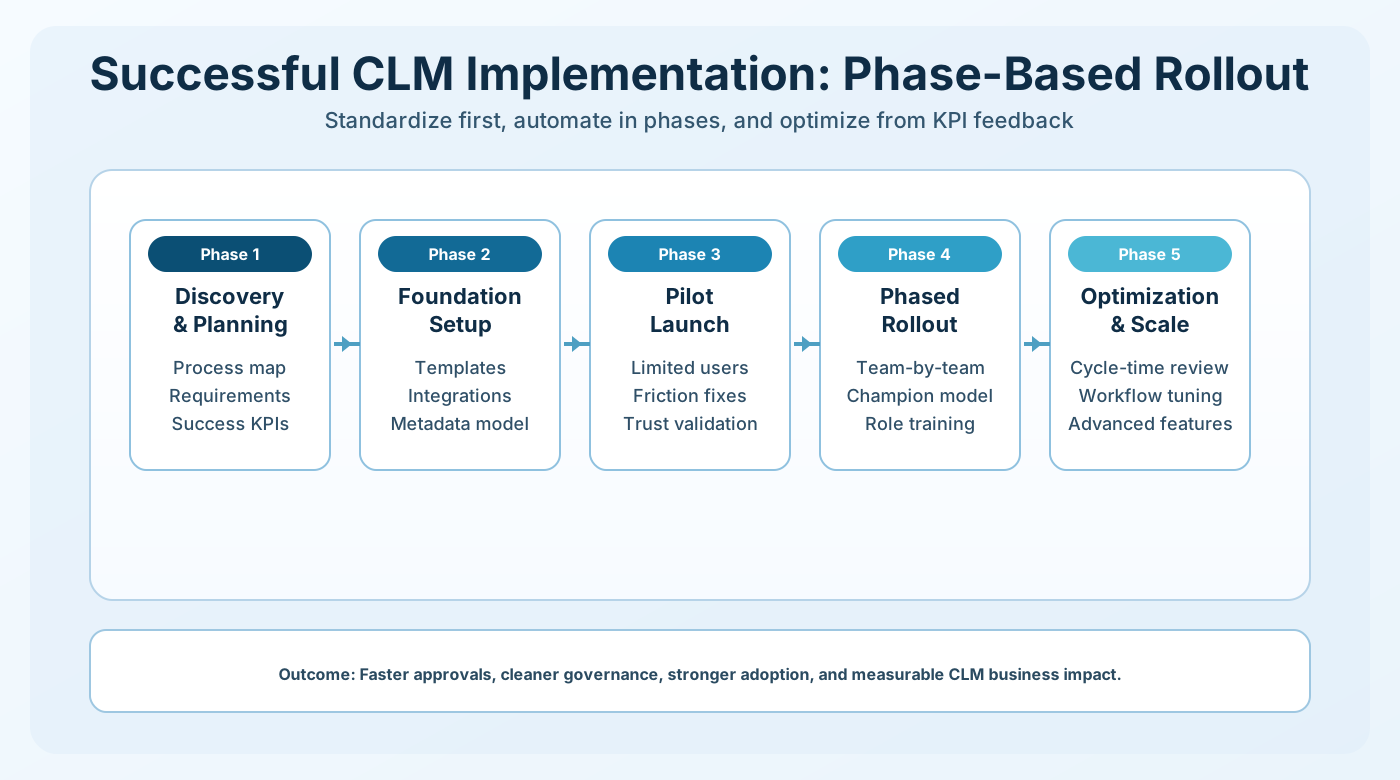
| Phase | Key Focus | Outcome |
|---|---|---|
| Discovery and planning | Process map, requirements, scope | Shared implementation direction |
| Foundation setup | Configuration, templates, integrations | Usable platform baseline |
| Pilot launch | Limited-user testing and refinement | Lower rollout risk |
| Phased rollout | Expand by team or region | Better support and adoption |
| Optimization | Analytics, refinement, advanced features | Long-term CLM maturity |
Need a solution that supports phased rollout and lifecycle visibility? Review CAMARC CLM software.
References: Enterprise case study, CAMARC, Best CLM software
Lesson 4: Make Governance and Training Part of the Rollout
Adoption depends on governance and user readiness, not only system design. Leadership support, clear targets, and champions help sustain engagement and reduce fallback to email and spreadsheets.
For CLM deployments, governance means clear ownership, role-based access control, controlled templates, and a regular dashboard review cadence. Training should be role-specific and grounded in weekly tasks.
Step-by-Step Governance and Training Framework
- Define ownership: executive sponsor, process owner, platform owner, and champions.
- Configure role-based access with SSO and auditability.
- Train by role: requestors, reviewers, approvers, admins, and leaders.
- Build a champion network for local support.
- Create support assets: quick guides, FAQs, and escalation paths.
| Area | Good Practice |
|---|---|
| Ownership | Executive sponsor, process owner, system owner, champions |
| Security | SSO, RBAC, audit history, controlled permissions |
| Enablement | Role-based training, practical scenarios, quick guides |
| Support | Champion network, office hours, issue tracking |
| Governance | Template control, dashboard review cadence, release review |
CAMARC supports this model through workflow automation, dashboards, collaboration, role-based access, single sign-on, audit trails, and compliance-ready lifecycle tracking.
References: Microsoft adoption guidance, Champion program guidance, About CAMARC
Lesson 5: Measure Adoption and Optimize After Go-Live
Go-live is not proof of success. A successful CLM implementation appears in behavior and metrics: contracts move through the platform, dashboards reflect reality, and renewal alerts are trusted.
The practical operating model is simple: measure what matters, review monthly, and optimize workflows, training, and support based on real usage patterns.
| KPI | Why It Matters |
|---|---|
| Contract cycle time | Measures speed improvement |
| Approval turnaround time | Shows bottlenecks and delays |
| Renewal and obligation completion | Protects revenue and compliance |
| User adoption by role | Shows where enablement is needed |
| Contracts processed in-system | Confirms behavior change |
| Support ticket volume | Highlights friction after rollout |
References: Enterprise case study, Adoption guides, CLM software
Business Value of a Successful CLM Implementation
A successful contract lifecycle management implementation delivers more than efficiency. It improves control, visibility, scalability, and cross-functional execution quality.
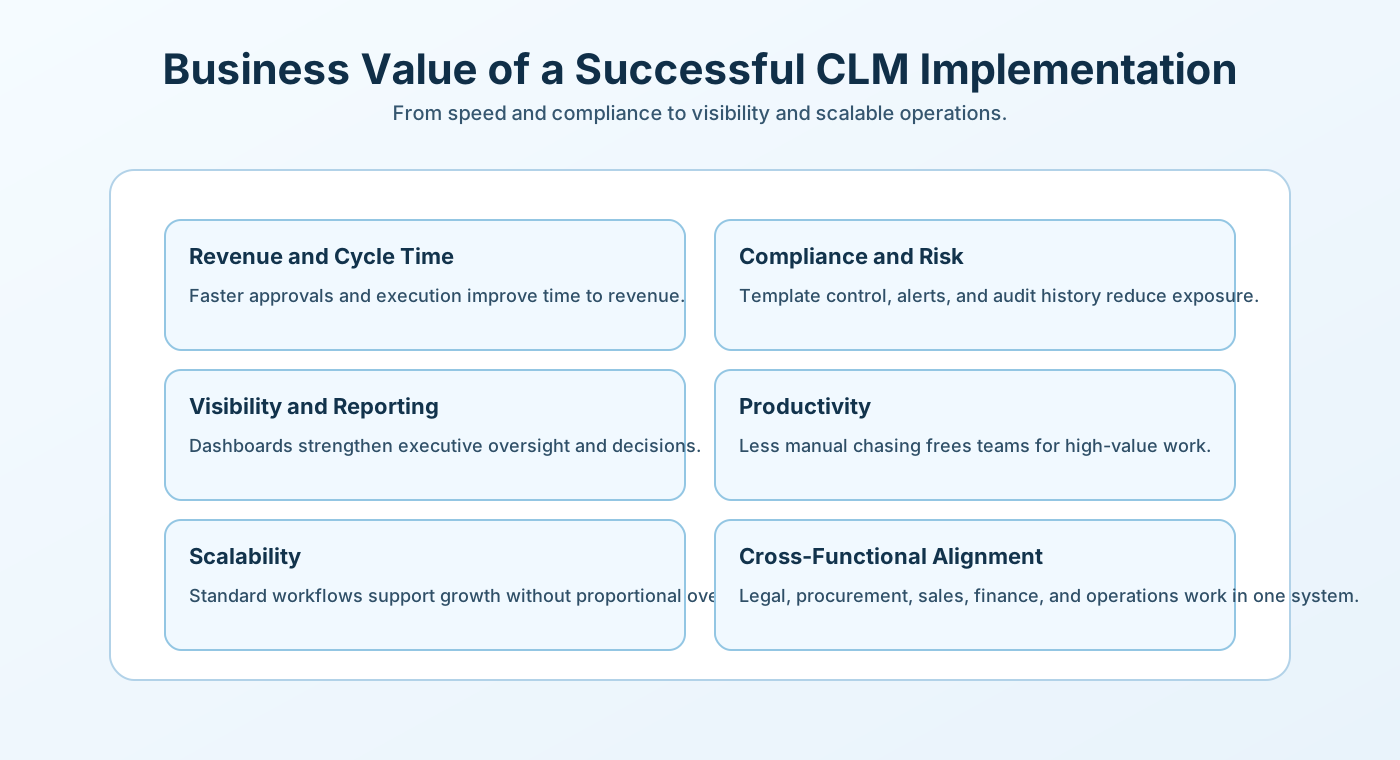
| Business Area | Value Delivered |
|---|---|
| Revenue and cycle time | Faster approvals and execution support quicker time to revenue |
| Compliance and risk | Better template control, alerts, and audit history reduce exposure |
| Visibility and reporting | Dashboards improve decision-making and executive oversight |
| Productivity | Less email chasing and fewer manual status checks free teams for higher-value work |
| Scalability | Standardized workflows support growth without proportional overhead |
| Cross-functional alignment | Legal, procurement, sales, finance, and operations work from one system of record |
References: Finance Digest analysis, CAMARC, CLM software
Why CAMARC Fits a Modern CLM Rollout
CAMARC is built for teams that need a workflow-first CLM solution with visibility and governance. It combines centralized intake, automated routing, collaboration, dashboards, role-based access, audit trails, obligation tracking, and integrated execution in one environment.
For teams comparing contract lifecycle management vendors, the core question is practical fit: which platform helps real teams request, review, approve, sign, and track contracts with less friction and more control. CAMARC is designed around that operating reality.
References: CAMARC, About, Contract analysis tools
FAQs
1. What is the most important factor in a successful CLM implementation?
Alignment between people, process, and technology. Strong leadership, clear goals, clean data, phased rollout, and role-based adoption support matter as much as software features.
2. How long does a contract management software implementation usually take?
It depends on scope, integrations, migration complexity, and teams involved. A phased rollout is usually safer than a big-bang deployment because it allows learning and refinement.
3. What are the biggest CLM implementation challenges?
Weak planning, poor data migration, low stakeholder buy-in, over-customization, and weak post-launch governance are among the most common issues.
4. Why is data migration so important in CLM deployment?
Because migration quality shapes trust. If contracts, dates, metadata, or ownership details are wrong after go-live, users quickly lose confidence in the new system.
5. What should teams measure after go-live?
Track cycle time, approval turnaround, adoption by role, contracts processed in-system, missed renewals, and support volume.
6. How does CAMARC support a successful CLM rollout?
CAMARC supports centralized intake, automated workflows, collaboration, dashboards, role-based access, audit trails, compliance visibility, and lifecycle tracking in one environment.