Managing Supplier Contracts in Procurement
Procurement teams are no longer measured only by how well they negotiate price. They are expected to manage supplier performance, reduce risk, support compliance, maintain audit readiness, and help the business make better sourcing decisions. That makes managing supplier contracts in procurement a strategic capability, not a back-office task.
In many organizations, supplier agreements are still spread across inboxes, shared drives, spreadsheets, and disconnected approval chains. That creates delays, weak visibility, and unnecessary risk. It becomes harder to track obligations, monitor renewals, compare terms, or prove who approved what. A stronger supplier contract management process gives procurement teams consistent control across the supplier lifecycle.
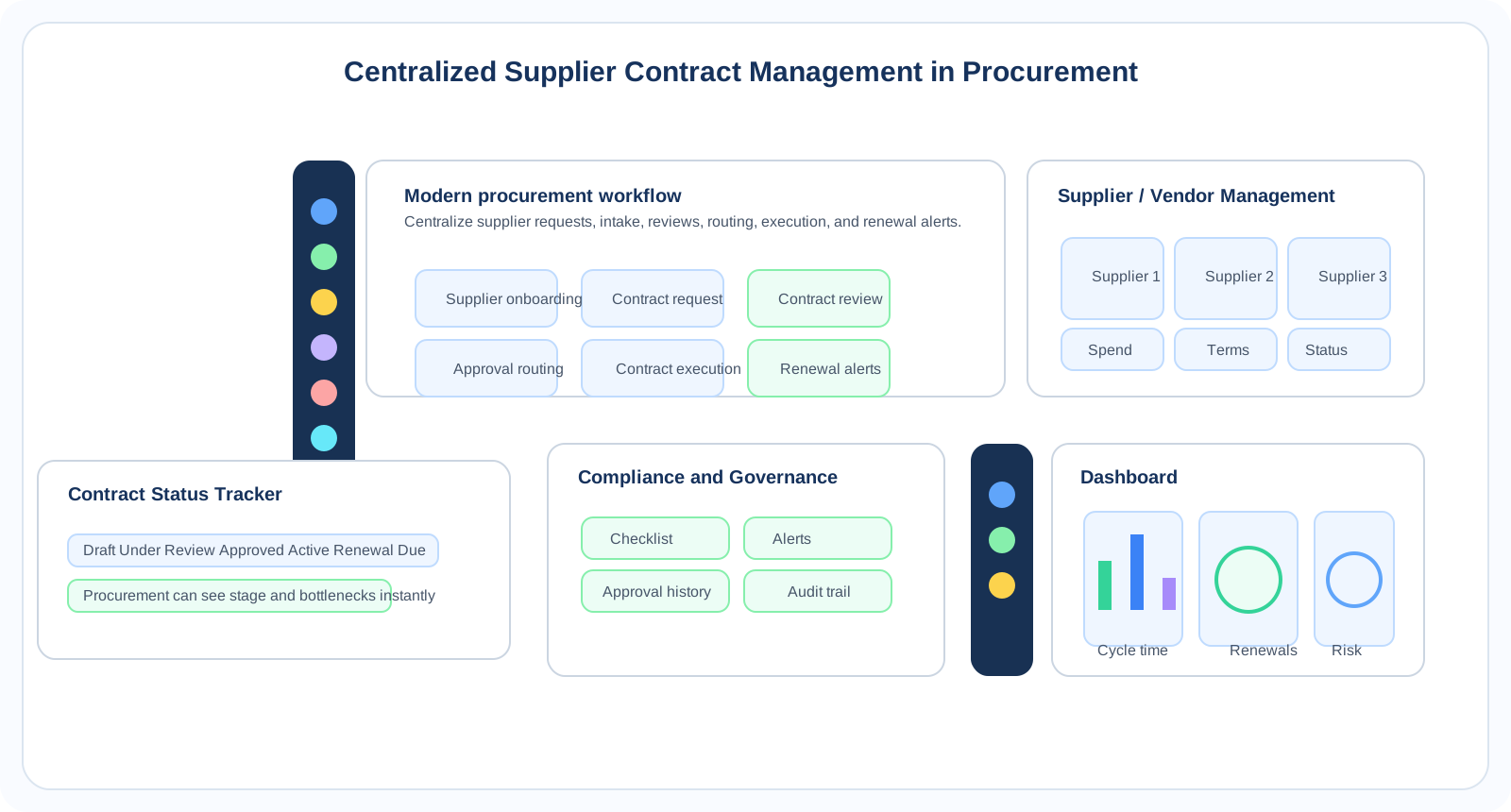
This is where CAMARC fits naturally. CAMARC (Contract Automation & Management) is designed to centralize contract requests, approvals, execution, tracking, collaboration, and reporting in one structured environment. For procurement teams, that means better visibility into vendor commitments, faster reviews, stronger governance, and more confidence in supplier decisions.
Key Takeaways
- Centralize supplier agreements, amendments, and approvals so procurement works from a single source of truth.
- Use standardized intake and routing to reduce cycle time and strengthen audit readiness.
- Track obligations, notice periods, and renewals continuously, not only at signature time.
- Use clause comparison and reporting to improve negotiation readiness and supplier governance.
- Procurement-focused CLM software should support workflow, controls, and lifecycle visibility, not just storage.
References: CAMARC Homepage and Contract Management Articles.
Why Supplier Contracts Are Difficult to Manage in Procurement
Procurement contracts rarely move through one team alone. A supplier agreement often touches procurement, legal, finance, operations, compliance, and business owners before it is approved. After signature, the work is not over. Teams still need to monitor obligations, renewals, service terms, risk exposure, and vendor commitments.
That is why vendor contract management becomes difficult when organizations rely on fragmented processes. If supplier data lives in one system, approvals happen in email, drafts sit in folders, and renewals are tracked manually, procurement loses visibility. As a result, supplier contract compliance, supplier contract monitoring, and supplier contract renewal take more time and introduce avoidable risk.
The problem grows as contract volume increases. Procurement teams may struggle to locate the latest version of a supplier agreement, compare terms with previous vendor contracts, identify non-standard clauses, track approval status, monitor renewal deadlines, or manage supplier contract governance across departments.
A modern procurement contract lifecycle management approach helps solve this by turning supplier contracts into structured, visible workflows rather than static files.
References: Best Contract Lifecycle Management Software and Microsoft adoption guidance for contract lifecycle management.
Want a more structured way to manage approvals, supplier obligations, and renewals? Explore CAMARC to see how end-to-end contract visibility supports procurement teams.
Explore CAMARCWhat Supplier Contract Management Includes
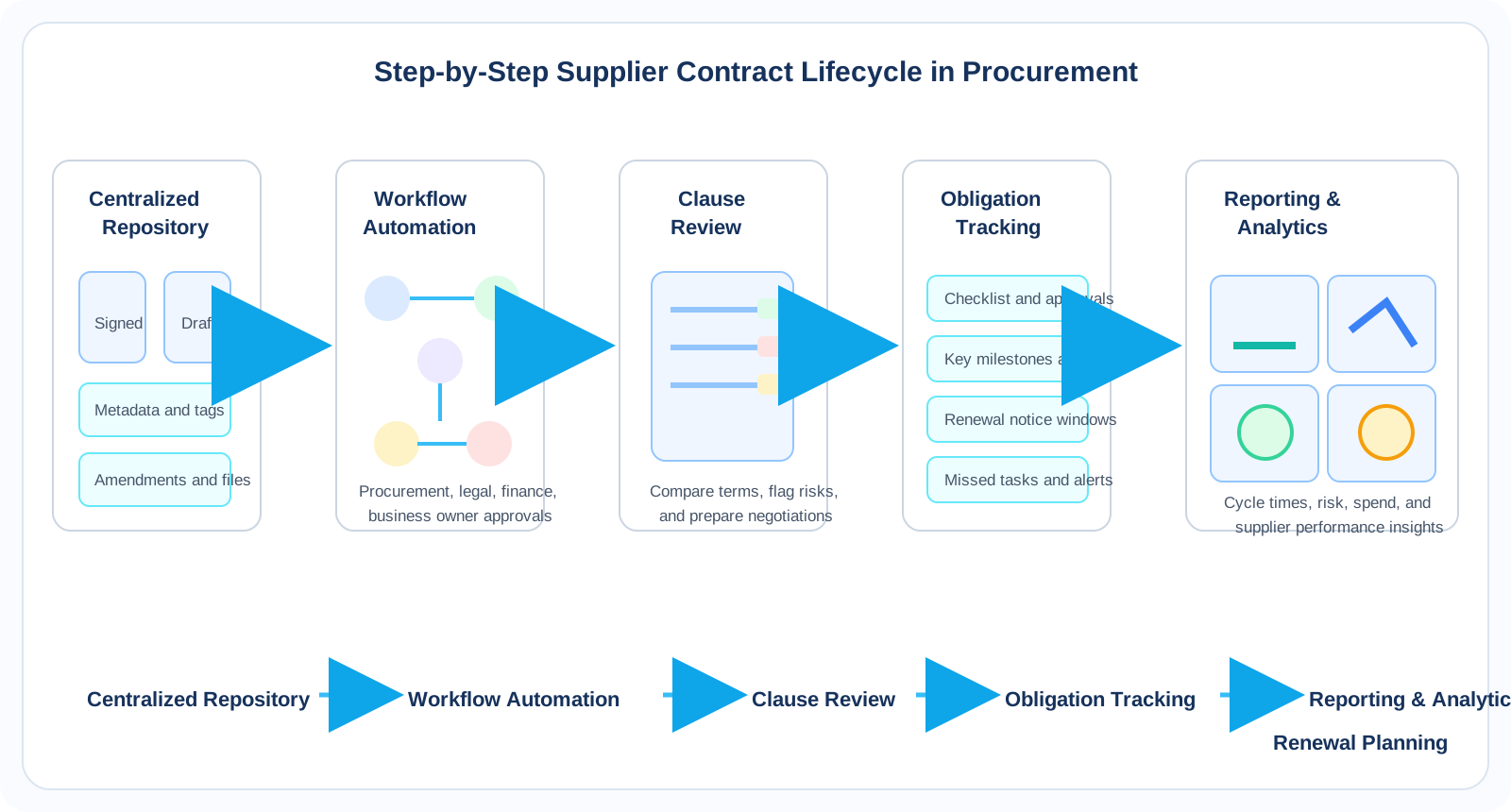
At its core, supplier contract management covers the full lifecycle of a supplier agreement, from request and drafting to review, approval, execution, monitoring, amendment, and renewal.
For procurement, this usually includes supplier intake and request capture, contract drafting and clause review, workflow-based approvals, contract execution and storage, supplier obligation tracking, compliance monitoring, renewal planning, and reporting for governance and performance review.
A stronger supplier contract management software approach helps procurement shift from reactive contract handling to a proactive, governed process. That matters because procurement is not only responsible for getting contracts signed, it is also responsible for ensuring supplier agreements deliver operational value over time.
| Lifecycle Stage | Procurement Focus | Why It Matters |
|---|---|---|
| Request & intake | Capture supplier need, business context, and requirements | Reduces incomplete or informal contract starts |
| Drafting & review | Standard terms, clause comparison, legal review | Improves consistency and risk control |
| Approval routing | Procurement, legal, finance, business approval flow | Speeds decisions and improves accountability |
| Execution | Final sign-off and controlled storage | Ensures the right version is retained |
| Active monitoring | Obligations, milestones, pricing, service terms | Supports supplier performance oversight |
| Renewal & renegotiation | Renewal alerts, review windows, negotiation prep | Prevents rushed renewals and missed leverage |
This is why procurement teams increasingly look for procurement and contract management software that can support the entire lifecycle rather than just storing files.
References: Benefits of Contract Lifecycle Management Software and Microsoft adoption guidance for contract management.
How to Manage Supplier Contracts in Procurement Step by Step
Below is a practical framework procurement teams can follow to improve supplier contract risk management, strengthen governance, and reduce manual contract work.
Step 1: Centralize all supplier contracts and related records
If procurement cannot find contracts quickly, everything else becomes harder. Start by creating a single source of truth for supplier agreements, amendments, approval records, and supporting documents.
How to do it
- Identify where supplier contracts currently live.
- Consolidate active contracts into one contract repository.
- Apply consistent naming and metadata standards.
- Tag key fields such as supplier name, contract value, owner, expiry date, and category.
- Ensure the final signed version is always easy to locate.
Centralization supports both supplier contract governance and long-term monitoring.
Step 2: Standardize the request and approval workflow
Many procurement delays happen before a contract is even reviewed properly. Standardized workflow reduces ambiguity and helps the right people get involved at the right time.
How to do it
- Create a standard intake process for supplier contract requests.
- Define approval paths by spend, risk level, or contract type.
- Route contracts automatically to legal, finance, and business stakeholders where needed.
- Track status at every step.
- Keep an audit trail of approvals, edits, and comments.
A structured workflow is a major advantage of modern vendor and contract management software.
Step 3: Improve clause review and negotiation readiness
Procurement should never go into supplier discussions without context. Better review processes help teams compare terms, identify risk, and negotiate from a stronger position.
How to do it
- Compare proposed clauses against approved standards or previous vendor contracts.
- Review pricing terms, service levels, notice periods, penalties, liabilities, and renewal language.
- Flag non-standard language for legal or stakeholder review.
- Summarize key differences before negotiation meetings.
- Capture requested changes clearly before sending a revised version back.
This is especially important when evaluating contract management vendors, negotiating with new suppliers, or reviewing high-value vendor agreements.
Step 4: Track compliance, obligations, and dates continuously
Signing a contract does not mean contract management is finished. Procurement still needs visibility into supplier deliverables, commitments, milestones, and notice dates.
How to do it
- Record obligations and important dates in the system.
- Set alerts for expirations, renewals, and notice periods.
- Track compliance requirements and contractual commitments.
- Review supplier status regularly through dashboards or reports.
- Escalate contracts that show risk, delays, or missed obligations.
This step is where supplier contract compliance and supplier contract monitoring become operational rather than theoretical.
Step 5: Use reporting to strengthen procurement decisions
Procurement should use contract data to improve sourcing strategy, supplier review, and commercial decisions.
How to do it
- Report on contract cycle times, renewals, approval delays, and risk exposure.
- Review historical contracts before negotiating with a supplier.
- Compare obligations and outcomes across vendors.
- Identify bottlenecks in the approval process.
- Use insights to support better supplier selection and governance decisions.
This is also where procurement teams gain more value from contract lifecycle management software vendors that support dashboards, analytics, and operational reporting.
Step 6: Prepare supplier renewals before they become urgent
Late renewals usually weaken procurement leverage. A better process gives teams time to review supplier performance and renegotiate from a position of control.
How to do it
- Identify contracts entering the renewal window.
- Review supplier delivery performance, spend, issues, and obligations.
- Decide whether to renew, amend, rebid, or exit.
- Prepare commercial and legal review early.
- Document the final decision and next action clearly.
This is a critical part of managing supplier contracts well over the long term.
References: Microsoft adoption guidance for procurement insight acceleration and contract lifecycle management agents.
If your procurement team needs more control over approvals, renewals, and supplier obligations, browse the CAMARC articles library for more contract operations guidance.
Browse ArticlesWhat to Look for in Procurement Contract Management Software
Not every platform supports procurement workflows equally well. If the goal is stronger procurement contract management software capability, focus on the features that directly improve supplier control and lifecycle visibility.
| Capability | Why It Matters |
|---|---|
| Central repository | Keeps supplier contracts organized and searchable |
| Workflow automation | Speeds approvals and reduces manual follow-up |
| Version control | Prevents confusion over the latest document |
| Audit trail | Shows who changed or approved what |
| Obligation tracking | Supports ongoing supplier accountability |
| Renewal alerts | Improves renewal planning and negotiation readiness |
| Reporting and dashboards | Strengthens governance and sourcing insight |
| Role-based access | Protects contract information and improves control |
When comparing contract lifecycle management vendors or contract lifecycle management software vendors, procurement leaders should focus on operational fit, not just long feature lists. The right platform should support how procurement actually works: cross-functional approvals, supplier visibility, compliance tracking, and structured renewal management.
References: CAMARC Homepage and Best Contract Lifecycle Management Software.
Evaluating contract management vendors for procurement use cases? Start by prioritizing workflow clarity, renewal control, compliance tracking, and reporting, not just storage.
Talk to CAMARCBusiness Value
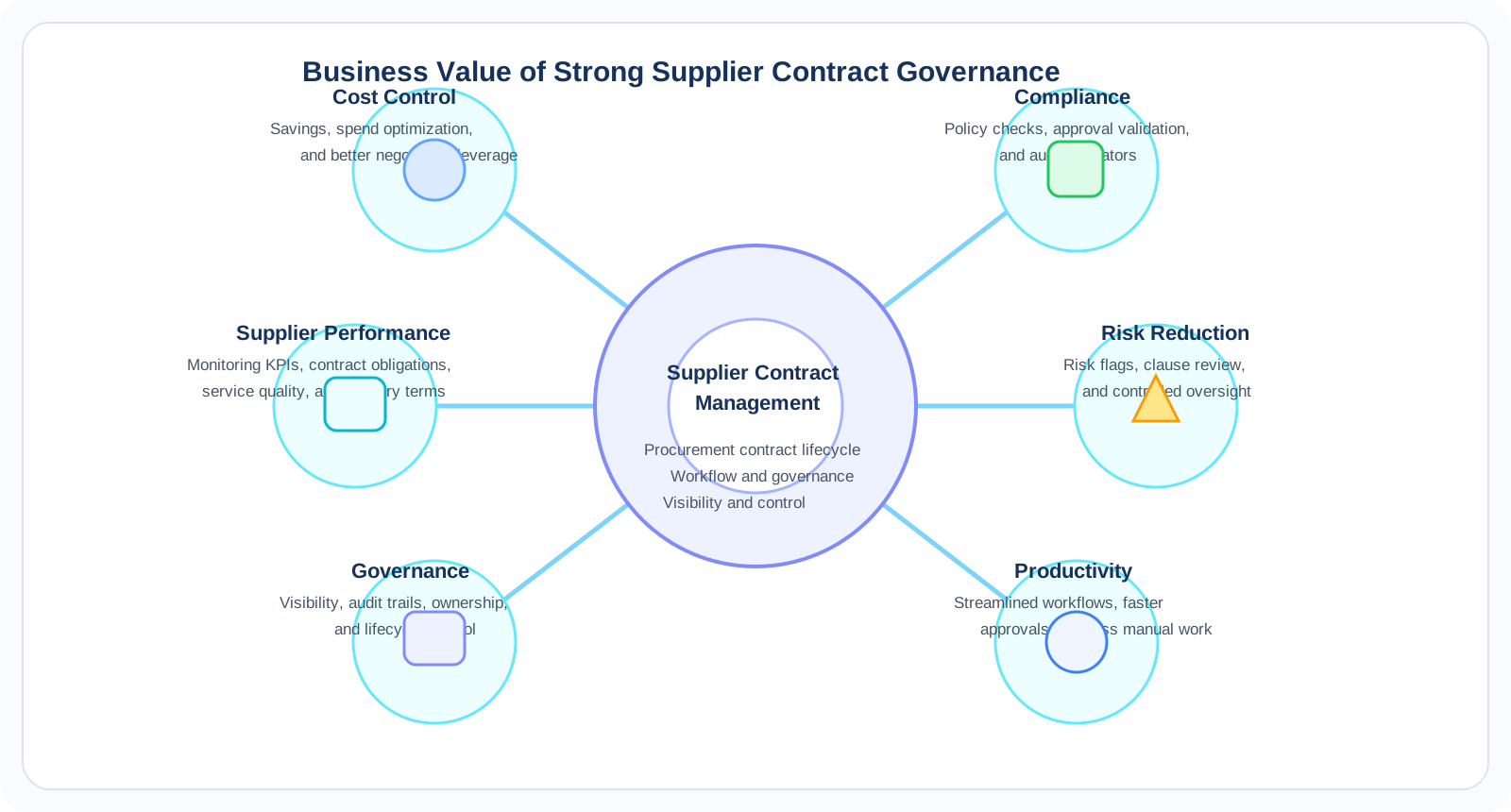
Strong supplier contract management creates measurable business value beyond contract administration. It helps organizations improve supplier accountability, reduce risk, support audit readiness, and make better procurement decisions.
| Business Area | Value Delivered |
|---|---|
| Cost control | Better renewal timing and stronger negotiation preparation |
| Compliance | Better visibility into obligations and approval discipline |
| Risk reduction | Faster identification of non-standard terms and missed commitments |
| Productivity | Less manual chasing and fewer disconnected contract records |
| Governance | Stronger audit trail and better lifecycle accountability |
| Supplier performance | More consistent monitoring of commitments and delivery terms |
For leadership teams, this matters because supplier agreements affect spend, service quality, vendor relationships, and operational continuity. A structured procurement contract lifecycle management model gives procurement leaders the visibility they need to reduce friction while improving contract quality and decision-making.
References: Benefits of Contract Lifecycle Management Software and Microsoft adoption guidance for improving procurement cycle time.
Managing Supplier Contracts in Property Management and Commercial Real Estate
Property management teams run their own version of supplier contract management. Instead of raw materials or software licenses, the vendor base is landscaping, janitorial, HVAC, security, and general maintenance contractors, plus insurance certificates that must stay current for every service provider on a property.
The same supplier contract management discipline applies, with a few CRE-specific requirements layered on top:
| Property Management Need | How Supplier Contract Management Helps |
|---|---|
| Certificate of Insurance (COI) tracking | Automated expiration alerts prevent an uninsured vendor from working on-site unnoticed |
| Multi-property vendor rosters | A central repository shows which vendors are approved across which properties |
| Recurring service renewals | Renewal alerts for landscaping, janitorial, and maintenance contracts prevent lapses in service |
| Approval routing by property or region | Workflow automation routes vendor approvals to the right property manager or regional owner |
For a deeper look at how these workflows fit into a broader CRE contract strategy, see the CLM buyer's guide for commercial real estate teams, and for the performance-tracking side of vendor management, see vendor contract management to improve supplier performance.
How CAMARC Supports Procurement and Contract Management
CAMARC is positioned as a modern contract platform that centralizes contract requests, approvals, execution, tracking, collaboration, and reporting in one place. That makes it highly relevant for procurement teams looking to improve vendor contract management, strengthen supplier oversight, and manage supplier agreements with greater consistency.
Because CAMARC emphasizes workflow automation, auditability, obligation tracking, visibility, and governance, it aligns well with organizations that want more control over supplier contract monitoring, approval discipline, and renewal readiness. It also supports the broader shift away from manual, fragmented contract handling toward a more structured and scalable model.
For procurement teams comparing contract lifecycle management vendors, that balance of control, visibility, and usability is often the deciding factor. The right solution should not just store agreements. It should help procurement run supplier contracts as an operational process.
References: CAMARC Homepage and Contract Management Articles.
Ready to improve supplier approvals, contract visibility, and renewal control? Visit CAMARC to explore a more structured approach to contract automation and management.
Visit CAMARCFAQs
What is supplier contract management in procurement?
Supplier contract management in procurement is the structured process of creating, reviewing, approving, storing, monitoring, and renewing supplier agreements to improve control, compliance, and supplier performance.
Why is managing supplier contracts important?
Because supplier agreements affect cost, service delivery, compliance, risk exposure, and renewal timing. Without structure, procurement loses visibility and leverage.
What does procurement contract management software do?
It helps teams centralize supplier contracts, automate workflows, track approvals, monitor obligations, and manage renewals more effectively.
How does supplier contract compliance improve with CLM?
CLM improves compliance through structured workflows, audit trails, obligation tracking, approval visibility, and better monitoring of contract terms.
What should procurement teams track after a contract is signed?
They should track obligations, milestones, expirations, renewal windows, approval history, compliance requirements, and supplier performance indicators.
What should organizations look for when comparing contract lifecycle management software vendors?
They should prioritize workflow automation, audit trail strength, centralized visibility, reporting, renewal alerts, compliance support, and ease of use.